

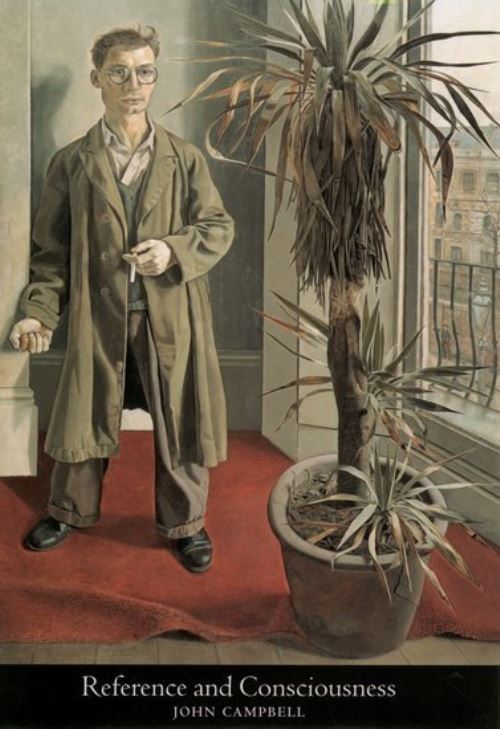
What explains our ability to refer to the objects we perceive? John Campbell argues that our capacity for reference is explained by our capacity to attend selectively to the objects of which we are aware; that this capacity for conscious attention to a perceived object is what provides us with our knowledge of reference. When someone makes a reference to a perceived object, your knowledge of which thing they are talking about is constituted by your consciously attending to the relevant object.
Campbell articulates the connections between these three concepts: reference, attention and consciousness. He looks at the metaphysical conception of the environment demanded by such an account, and at the demands imposed on our conception of consciousness by the point that consciousness of objects is what explains our capacity to think about them. He argues that empirical work on the binding problem can illuminate our grasp of the way in which we have knowledge of reference, supplied by conscious attention to the relevant object.
Reference and Consciousness illuminates fundamental problems about thought, reference, and experience by looking at the underlying psychological mechanisms on which conscious attention depends. It is an original and stimulating contribution to philosophy and to cognitive science. The Oxford Cognitive Science Series is a forum for the best contemporary work in this flourishing field, where various disciplines - cognitive psychology, philosophy, linguistics, cognitive neuroscience, and computational theory - join forces in the investigation of thought, awareness, understanding, and associated workings of the mind.
Each book will constitute an original contribution to its subject, but will be accessible beyond the ranks of specialists, so as to reach a broad interdisciplinary readership. The series will be carefully shaped and steered with the aim of representing the most important developments in the field and bringing together its constituent disciplines. General Editors: Martin Davies, James Higginbotham, Philip Johnson-Laird, Christopher Peacocke, Kim Plunkett
| ISBN: | 9780199243815 |
| Publication date: | 6th June 2002 |
| Author: | John Campbell |
| Publisher: | Oxford University Press an imprint of OUP OXFORD |
| Format: | Paperback |
| Pagination: | 240 pages |
| Series: | Oxford Cognitive Science Series |
| Genres: |
Cognitivism, cognitive theory Philosophy: metaphysics and ontology Philosophy: epistemology and theory of knowledge Philosophy of mind Cognition and cognitive psychology Psychology: states of consciousness Philosophy of language |
What explains our ability to refer to the objects we perceive? John Campbell argues that our capacity for reference is explained by our capacity to attend selectively to the objects of which we are aware; that this capacity for conscious attention to a perceived object is what provides us with our knowledge of reference.
Reference and Consciousness features in the following genres: Cognitivism, cognitive theory, Philosophy: metaphysics and ontology, Philosophy: epistemology and theory of knowledge, Philosophy of mind, Cognition and cognitive psychology, Psychology: states of consciousness, Philosophy of language
Hardback, Paperback. £43.19, down from the £47.99 cover price. Not Available.
Reference and Consciousness was written by John Campbell and published by Oxford University Press an imprint of OUP OXFORD
Reference and Consciousness has 240 pages
Yes it is part of Oxford Cognitive Science Series series
£43.19, reduced from £47.99. Not Available.