

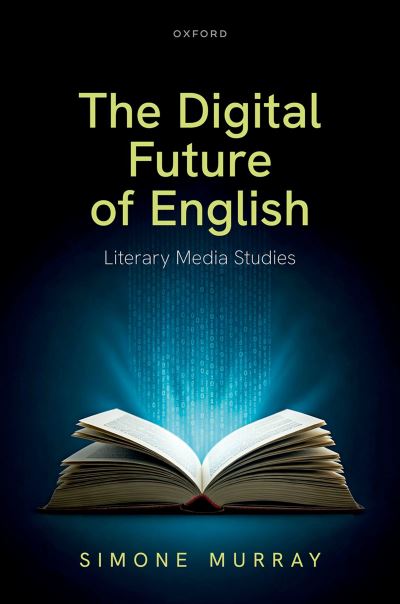
More than any other academic discipline, literary studies is the creation of print culture. How then can it thrive in the digital era? Early 1990s predictions of the book's imminent demise presented a simplistic either/or choice between the legacy of moribund print and triumphalist digital technology. Yet we have grown to experience the two media as complexly interdependent and even complementary. Clearly, digital does not kill print. But literary studies in the digital era cannot simply resume business as usual. It is urgently necessary to reconsider the discipline's founding assumptions in light of digital technology. The digital era prompts a rethinking of literary studies' object of study, as well as its methods, theories, audiences and pedagogical practices. What counts as literature necessarily shifts in an age of proliferating born-digital texts and do-it-yourself (DIY) online publication. Where should literary studies sit institutionally, and how might it graft contextually-oriented social sciences methods onto its traditionally humanistic mode of textual analysis? Why should literary study continue to marginalize emotional responses to texts when online communities bond via readerly affect? Who is the audience for literary criticism in an age where expertise is routinely challenged yet communication with global book-loving publics has never been technologically easier? Finally, how can we utilize digital tools to rejuvenate literary studies pedagogy and help English staff better connect with millennial-age students? Literary studies has been convulsed for decades by debates over electronic literature and, more recently, digitally-aided 'distant reading'. But these discussions still mostly confine themselves to demarcating our proper object of study. We need to think more expansively about digital technology's impact on the underpinning tenets of the discipline. Literary Media Studies is pitched at fellow literary scholars, book historians, media theorists, cultural sociologists, digital humanists and those working at the interface of these converging disciplines. It models constructive engagement with contemporary digital culture. Most importantly, it brings a burst of sorely needed optimism to the question of literary studies' digital future.
| ISBN: | 9780198952619 |
| Publication date: | 14th August 2025 |
| Author: | Simone Murray |
| Publisher: | Oxford University Press an imprint of OUP OXFORD |
| Format: | Hardback |
| Pagination: | 288 pages |
| Genres: |
Publishing and book trade Literary studies: c 1900 to c 2000 Cultural studies Media studies |
More than any other academic discipline, literary studies is the creation of print culture. How then can it thrive in the digital era? Early 1990s predictions of the book's imminent demise presented a simplistic either/or choice between the legacy of moribund print and triumphalist digital technology. Yet we have grown to experience the two media as complexly interdependent and even complementary. Clearly, digital does not kill print. But literary studies in the digital era cannot simply resume business as usual. It is urgently necessary to reconsider the discipline's founding assumptions in light of digital technology. The digital era prompts a rethinking of literary studies' object of study, as well as its methods, theories, audiences and pedagogical practices. What counts as literature necessarily shifts in an age of proliferating born-digital texts and do-it-yourself (DIY) online publication. Where should literary studies sit institutionally, and how might it graft contextually-oriented social sciences methods onto its traditionally humanistic mode of textual analysis? Why should literary study continue to marginalize emotional responses to texts when online communities bond via readerly affect? Who is the audience for literary criticism in an age where expertise is routinely challenged yet communication with global book-loving publics has never been technologically easier? Finally, how can we utilize digital tools to rejuvenate literary studies pedagogy and help English staff better connect with millennial-age students? Literary studies has been convulsed for decades by debates over electronic literature and, more recently, digitally-aided 'distant reading'. But these discussions still mostly confine themselves to demarcating our proper object of study. We need to think more expansively about digital technology's impact on the underpinning tenets of the discipline. Literary Media Studies is pitched at fellow literary scholars, book historians, media theorists, cultural sociologists, digital humanists and those working at the interface of these converging disciplines. It models constructive engagement with contemporary digital culture. Most importantly, it brings a burst of sorely needed optimism to the question of literary studies' digital future.
The Digital Future of English features in the following genres: Publishing and book trade, Literary studies: c 1900 to c 2000, Cultural studies, Media studies
The Digital Future of English is available in Hardback
The Digital Future of English was written by Simone Murray and published by Oxford University Press an imprint of OUP OXFORD
The Digital Future of English has 288 pages
£79.20