Buy from our bookstore and 25% of the cover price will be given to a school of your choice to buy more books. *15% of eBooks.
Audiobooks Narrated by Thomas A. Copeland
Browse audiobooks narrated by Thomas A. Copeland, listen to samples and when you're ready head over to Audiobooks.com where you can get 3 FREE audiobooks on us
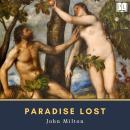
"Paradise Lost is an epic poem written by the Puritan English poet John Milton between 1658 and 1663, and published in 1667. This is a period of English history which encompasses the end of Oliver Cromwell's Commonwealth and the restoration of the monarchy in 1660.
Perhaps reflecting some of his country's turmoil during Milton's life, Paradise Lost deals with revolution in Heaven by Satan and his followers against God, their defeat and banishment to Hell, and their subsequent plotting of revenge, leading ultimately to Satan beguiling Eve in Paradise to taste the fruit of the Tree of Knowledge against the explicit command of God. Milton's vivid and poetic description of these events is both dramatic and compelling. The work gained swift acceptance and has always remained a popular and important part of English literature.
Originally published in ten books, a second edition was published in 1674 arranged into twelve books, the form in which it appears here."
"A Princess of Mars is a science fantasy novel by Edgar Rice Burroughs, the first of his Barsoom series. Full of swordplay and daring feats, the novel is considered a classic example of 20th-century pulp fiction. It is also a seminal instance of the planetary romance, a subgenre of science fantasy that became highly popular in the decades following its publication. Its early chapters also contain elements of the Western. The story is set on Mars, imagined as a dying planet with a harsh desert environment. This vision of Mars was based on the work of the astronomer Percival Lowell, whose ideas were widely popularized in the late 19th and early 20th centuries. John Carter, a Confederate veteran of the American Civil War, goes prospecting in Arizona immediately after the war's end. Having struck a rich vein of gold, he runs afoul of the Apaches. While attempting to evade pursuit by hiding in a sacred cave, he is mysteriously transported to Mars, called 'Barsoom' by its inhabitants. Carter finds that he has great strength and superhuman agility in this new environment as a result of its lesser gravity and lower atmospheric pressure. He soon falls in with a nomadic tribe of Green Martians, or Tharks, as the planet's warlike, six-limbed, green-skinned inhabitants are known. Thanks to his strength and martial prowess, Carter rises to a high position in the tribe and earns the respect and eventually the friendship of Tars Tarkas, one of the Thark chiefs. The Tharks subsequently capture Dejah Thoris, Princess of Helium, a member of the humanoid red Martian race. The red Martians inhabit a loose network of city-states and control the desert planet's canals, along which its agriculture is concentrated. Carter rescues Dejah Thoris from the green men in a bid to return her to her people."
"'Much attention has been paid to the 'scientific romance' novels of H. G. Wells, a founder of modern science fiction and one of the genre's greatest writers. In comparison, little attention has been given by critics to his works of fantasy, which in the opinion of many, are just as artistic and worthy of study. This work takes a critical look at Wells' little known fantasy The Sea Lady: A Tissue of Moonshine, which is 'a parable of dark foreboding that unveils the nothingness of utopian dreams' and foreshadows Franz Kafka's dark fables of the totalitarian age. A lengthy introduction by the editor provides a comprehensive overview of the text and the story of The Sea Lady, and serves to explain the ideas of civil death and every citizen's acting as a public servant, and the concept of totalitarian metaphysics, which deals with a revolt against the limits of the human condition."
"While hunting, the boy Anchises stumbles upon Venus's forest retreat and is so kindly entertained by the goddess that he becomes the proud father of Aeneas, the hero of Vergil's Aeneid. The poem is an epyllion like Marlowe's "Hero and Leander" and Shakespeare's "Venus and Adonis," a short erotic poem with a mythological subject. The style is Spenserian, the stanzas rhyming ababbccc.
When Brittain's Ida was published in 1628, the publisher ascribed it to Edmund Spenser. However, in 1926 Ethel Seaton discovered and published Fletcher's original manuscript, whose opening stanzas make clear that this is the work of Fletcher, who entitled it "Venus and Anchises." - Summary by T. A. Copeland"
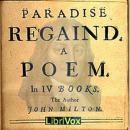
"Having been publicly acknowledged as God's "beloved Son," Jesus retires to the desert to meditate upon what it means to be the Messiah, about whose coming many conflicting opinions have been circulating among the Jews. Although a learned rabbi, Jesus possesses no knowledge beyond what is available to all human beings. Satan also takes a new interest in this favored "son of God" and seeks to learn what threat he constitutes.
The poem consists of a debate between these two adversaries, each seeking the same understanding of precisely what mankind's Savior will do in a world where the way to success typically lies through "wealth . . . honour . . . arms . . . arts . . . Kingdom . . . Empire . . . life contemplative, / Or active, tended on by glory, or fame." By withstanding Satan's temptation to all such worldly paths, Jesus proves himself to be a perfect, unfallen man and consequently worthy to win back paradise for mankind.
Repeatedly invited to take action—either to secure his kingdom or to prove himself deserving of the divine favor that has been shown him or simply to save his life—he resists, patiently suffering, withstanding, waiting. Yet he learns from his temptation, clarifying in his own mind what his mission on earth must be and the means to achieve it. For although Satan knows no more of his mission than he does himself, Satan points the way by offering the wrong goals or the wrong motives or the wrong means. Thus the Father of Lies against his will opens the way to salvation for human kind. (Summary by Thomas Copeland)"
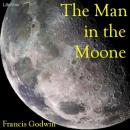
"A self-serving Spaniard discovers a means of traveling to the moon, describing his sensations in transit in terms remarkably consistent with modern astronauts' experiences. He finds on the moon a utopia, which he describes in detail, but being a fallen creature, he takes the first opportunity of coming home. ( Summary by Thomas A. Copeland )"
"This novel, which Shakespeare adapted in his pastoral comedy As You Like It, is the archetypal pastoral adventure. Two young persons of high birth, who have recently lost their fathers (one to death, one to banishment), fall in love but are separated almost at once and forced to flee to the Forest of Arden. There they meet again, but as Rosalynde is disguised for safety as a boy, named Ganymede, her lover Rosader does not recognize her.
Once Rosader has confided his love to Ganymede, they play a game in which the "boy" poses as Rosalynde to give Rosader practice in wooing. As the comic episodes, replete with dramatic irony, accumulate, minor characters with complementary romantic relationships fill in the spectrum of the sublime ludicrousness of sexual love until the shadow of death (which is not excluded from Arcadia!) brings matters to a happy conclusion.
The various sets of lovers are appropriately joined, and once the corrupt seats of authority back home have been either purged or reformed, Rosalynde's banished father the Duke and the high-born lovers return to civilization, bringing with them a better understanding of what really matters in life."
"John Carter's son, Carthoris, falls in love with his father's true friend, Thuvia of Ptarth, but she has been promised to another and is kidnapped by a third! Carthoris, suspected of the crime, spends the entire novel in efforts to rescue her and restore her to her fiancé. The adventures introduce to us a philosophical system or fringe science that challenges our conception of the nature of reality itself. (Summary by Thomas Copeland)"
"A madcap Frenchman posing as an ambassador's barber blackmails a dishonest duke to introduce him as a nobleman to a wealthy belle of Bath. Since the duke himself hopes to mend his fortunes by wedding this very woman, he attempts to murder Beaucaire, and failing that to discredit him. To test the lady's mettle, Beaucaire allows his deception to be exposed--up to a point--and there we must draw the curtain to preserve the surprise ending. ( Summary by Thomas A. Copeland )"
"The poem begins with the beloved god Balder, thought to be invulnerable, dead at the hands of the inoffensive blind god Hoder, in a game. Loki, whose deceit brought about this catastrophe, is promptly punished with exile, and Odin, Balder's father, sponsors a heroic quest to rescue his son from the land of the dead. This desperate venture unexpectedly meets with partial success, a conditional agreement to release Balder if everyone in the land of the living mourns his death. And even though over every hope hangs the threat of the ultimate end of the reign of the Norse gods, the mother of the gods points out that "much must yet be tried which shall but fail." - Summary by T. A. Copeland"
"Elizabeth Drury, daughter of Donne's patron, Sir Robert Drury, died in 1610. A year later Donne laments her hyperbolically as the soul of the created universe. In "An Anatomy of the World: The First Anniversary," he poetically scrutinizes that year-old corpse, the world, as if he were performing an autopsy (an "anatomy").
He finds it corrupt in every part, the dead woman having carried with her every spark of goodness it once contained. To commemorate the second anniversary of Miss Drury's death, Donne's "Progress of the Soul" (1612) celebrates her liberation from this world, urges readers to follow her example, and performs a cheerful spiritual meditation upon the process of death, burial, and corruption-cheerful because death frees us from the inconveniences of this life and serves as a portal to the next.
Each poem is introduced by an encomium that, though purporting to be written by another hand, appears to be the poet's own work. (Summary by Thomas Copeland)"
"John Dryden published Absalom and Achitophel: A Poem in 1681. It is an elaborate historical allegory using the political situation faced by King David (2 Samuel 14-18) to mirror that faced by Charles II. Each monarch had a son whom a high-ranking minister attempted to use against him. James Scott, first Duke of Monmouth, Charles II's illegitimate son, was detected planning a rebellion late in 1681, supposedly instigated by the Earl of Shaftesbury, who was tried for high treason, and it is believed that Dryden wrote the poem in an effort to sway the jury in his trial. The fates of both Absalom (Monmouth) and Achitophel (Shaftesbury) are left unspecified at the end of the poem (Monmouth did rebel in 1685, after his father's death, and was executed, and Shaftesbury was acquitted), but we are left to surmise that their fates would resemble those of their Biblical counterparts: Absalom was killed against David's instructions and Achitophel hanged himself.
The poem can be enjoyed without any special knowledge of either the Bible or seventeenth-century English history, but it is useful to understand why Monmouth (AKA Absalom) was such a useful tool to use against his father: Charles had many illegitimate offspring, but his wife was barren, so at his death the crown would pass (did pass) to his brother, James, who was Catholic, but Monmouth was Protestant as well as well-beloved by both the king and the people. England had good reason to dread a return of officially enforced Catholicism. The narrator's urbane attitude toward David's amatory adventures in the opening of the poem and his burlesque of the supposed Jebusitical plot (the "Popish Plot" of 1678) establish clearly his Tory bias in favor of the Establishment and his disdain of the panic caused by fear of Catholicism (Dryden himself converted to the Catholic faith at some time before 1685)."
Join our community for the latest bookish news, reading recommendations, exclusive opening extracts, author events and competitions. It\'s all free. And enter a monthly draw to win a £50 Gift Card. See past winners here