Buy from our bookstore and 25% of the cover price will be given to a school of your choice to buy more books. *15% of eBooks.
Audiobooks Narrated by Peter Lerman
Browse audiobooks narrated by Peter Lerman, listen to samples and when you're ready head over to Audiobooks.com where you can get 3 FREE audiobooks on us
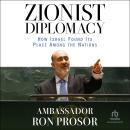
"The riveting story of the most audacious diplomatic enterprise of the last century—creating and securing the Jewish state—as seen through the eyes of the foremost Israeli diplomat of our generation.
Zionist Diplomacy tells the untold story of how the Jewish people used diplomacy to restore their ancient homeland and build a modern nation—the State of Israel—and continue to do so today. Filled with behind-the-scenes accounts of key moments in history—the Balfour Declaration, the UN partition plan, and the fall of the Soviet Union—Ambassador Ron Prosor offers his unique perspective of the Zionist movement's top diplomatic figures, including Theodor Herzl, Chaim Weizmann, Abba Eban, and Shimon Peres. He then explores the diplomatic challenges and triumphs facing Israel across his three decades in top diplomatic posts—in Washington, London, Berlin, and at the United Nations—and what Israeli diplomacy must do to thrive in a post-October 7 era."
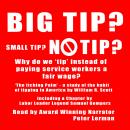
"The Itching Palm is a 1916 social and economic critique by William Rufus Scott. The book is a sustained attack on the practice of tipping in the United States, which Scott viewed as an imported aristocratic custom incompatible with American democratic ideals. Scott argued that tipping fostered what he called “flunkyism'—a system in which workers were encouraged to be servile in pursuit of gratuities. He maintained that tipping: ·Undermined the dignity and independence of workers. ·Allowed employers to shift labor costs onto customers. ·Reinforced class distinctions between those who gave tips and those who received them. ·Was inconsistent with a society based on equality rather than inherited status. The book examines tipping from multiple perspectives, including its economics, ethics, psychology, legal status, and effects on employers and employees. Chapters include “The Economics of Tipping,” “The Ethics of Tipping,” “The Psychology of Tipping,” and “Laws Against Tipping.” What’s striking is how modern some of Scott’s arguments sound. More than a century ago, he criticized the reliance of service workers on customer gratuities rather than employer-paid wages—a debate that continues in the United States today."
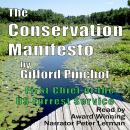
"The Conservation Manifesto (also known as The Fight for Conservation) is a 1910 book by Gifford Pinchot, the first chief of the United States Forest Service and one of the principal architects of the American conservation movement. Gifford Pinchot argued that America’s forests, water, minerals, and other natural resources should be managed scientifically for the benefit of the public and future generations rather than exploited for short-term private profit. He viewed conservation not merely as an environmental issue but as a question of democracy, economic fairness, and national prosperity.
Main Themes:
Wise use of natural resources rather than wasteful exploitation.
Government stewardship of public resources.
Opposition to powerful private interests that sought control of forests, minerals, and waterways.
Conservation as a means of ensuring prosperity for future generations.
The connection between conservation and democratic government.
The book includes essays and speeches organized around topics such as:
Prosperity
Homebuilding for the Nation
Better Times on the Farm
Principles of Conservation
Waterways
Business
The Moral Issue
Public Spirit
The Children
An Equal Chance
The New Patriotism
The Present Battle Historical Importance
The book was published during the presidency of Theodore Roosevelt, with whom Pinchot worked closely. It helped define the Progressive Era conservation philosophy and laid intellectual groundwork for later environmental and resource-management policies in the United States."
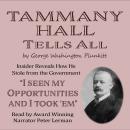
"Originally entitled Plunkitt of Tammany Hall (1905) is a classic of American political literature that records the candid, “plain talks” of George Washington Plunkitt, a powerful leader within New York City’s Tammany Hall political machine. Compiled by journalist William L. Riordon, the book is famous for its unapologetic defense of machine politics and its pragmatic “streetwise” philosophy. It’s a guide for how to steal money by manipulating the political machinery.
Plunkitt’s most enduring contribution to political discourse is his distinction between 'honest graft” and “dishonest graft'.
Honest Graft: Plunkitt defined this as using insider political information to make legal profits. His famous example was buying land he knew the city would soon need for a park or bridge, then selling it back at an inflated price—a practice he summed up with his (in)famous motto-
“I seen my opportunities and I took ‘em'.
Dishonest Graft: He strictly condemned illegal activities such as blackmailing saloonkeepers, working with gamblers, or robbing the city treasury directly."
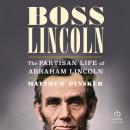
"An eye–opening portrait of Lincoln behind the scenes: Here is the career–long party politician whose brilliant coalition–building during the Civil War set the political foundation for emancipation and Union victory.
We know Lincoln as the eloquent, compassionate leader of a nation torn by civil war. But he had another, less visible side, equally central to his character and leadership: Lincoln was a master of party politics. Schooled as a Whig in the rough–and–tumble of Illinois electioneering in the 1830s, Lincoln skillfully navigated treacherous partisan crosscurrents and helped build the Republican party into a viable force. His decades of experience as a party leader proved invaluable to him as president and commander in chief during the Civil War.
Matthew Pinsker’s groundbreaking history draws extensively on Lincoln’s private correspondence to move beyond the marble icon and realize a flesh-and-blood character in Boss Lincoln."
"The Nature of the Judicial Process by Benjamin N. Cardozo is one of the most influential works on American jurisprudence. Written while Cardozo was a judge on the New York Court of Appeals (before joining the US Supreme Court), it explores how judges actually decide cases and the philosophy behind judicial decision-making.
Cardozo asks, “What is it that I do when I decide a case?” He aims to uncover the principles—both conscious and unconscious—that guide judicial reasoning. Cardozo identifies four main sources that influence judicial decisions: Precedent, History and Custom, the sense of Justice or Moral Philosophy, Social Welfare or Utility. He emphasizes that these sources interact and often conflict, requiring judges to balance them rather than follow any single one absolutely.
The Nature of the Judicial Process is widely respected for its clarity, its honesty about how law and judging really work (including tensions, uncertainty, moral influence), and its influence on subsequent legal theory."
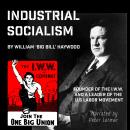
"William Dudley Haywood, nicknamed “Big Bill,” was an American labor organizer as well as founding member and leader of the Industrial Workers of the World (commonly referred to as the “Wobblies”). He was also a member of the executive committee of the Socialist Party of America.
During the first two decades of the 20th century, Haywood was involved in several important labor battles, including the Colorado Labor Wars, the Lawrence Textile Strike and other textile strikes in Massachusetts and New Jersey.
Haywood was often targeted by state and federal prosecutors. In 1918 he was one of 101 IWW members jailed for anti-war activity during the First Red Scare. He was sentenced to twenty years in prison. In 1921, while out of prison during an appeal of his conviction, Haywood fled to the Soviet Union, where he spent the remaining years of his life, and where he died in 1928. Haywood is one of the five Americans buried at the Kremlin.
The analysis of the United States economy put forth by Haywood in this polemic, and his advocacy of the principles of Socialism are now over 110 years old. Many of his criticisms of capitalism still contain enough kernels of truth to make listening and understanding worthwhile. His explanation of Socialism—as understood in 1911—is passionate and easy to understand."
"When a detective second-guesses his gut, he'll have to get creative to catch the killer.
Luca worries cancer and divorce have dulled his razor-sharp instincts. So the detective is relieved when his next murder case seems like a no-brainer.
When the wealthy victim is found dead in her private-island home, the gold-digging husband seems like the obvious killer.
As Luca digs deeper and follows the clues, however, he uncovers a whole new line-up of possible suspects. No longer able to rely on his gut feelings, Luca puts the victim's sordid affairs and her rivalries under the microscope.
With time running out, Detective Luca must find a way to regain his swagger and solve the case before the killer strikes again.
The Serenity Murder is the 2nd book in the riveting Luca Mystery series. If you like hardened detectives, unexpected plot twists, and seeing the crime from multiple points of view, check out this gripping whodunit.
You can enter the Luca Mystery Series with any book."
"Stories of New York is a collection of five short stories by noted American authors of the late 19th century, published in 1893, which features the first work by Edith Wharton to appear in a bound book. All stories had been previously published in Scribner’s Magazine.
The stories are all set in New York City and concern themselves with various facets of life in Gilded Age New York City—from the highest of high society to the commonest pensioner in less fashionable neighborhoods in boarding houses. The stories are about manners and mores; about the people of various strata of society relating to each other and the world around them.
“Mrs. Manstey’s View” by Edith Wharton
“A Puritan Ingenue” by John S. Wood
“The End of the Beginning” by George A Hibbard
“The Commonest Possible Story” by Bliss Perry
“From Four to Six: A Comedietta” by Annie Eliot"
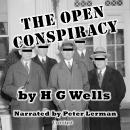
"H. G. Wells, one of the 20th Century’s greatest writers—author of The Time Machine, War of the Worlds, The Invisible Man—wrote The Open Conspiracy to express his ideas about how a peaceful and cooperative world community could bring happiness and prosperity to all the inhabitants of the earth. Wars would no longer be fought and hunger would not rear its ugly head. Writing shortly after World War One, he writes of the horrible waste of life and immense suffering that extreme nationalism brought to Europe. He is no fan of Socialism or Communism but neither is he a supporter of unbridled Capitalism.
It is an engrossing and compelling argument for peace and prosperity through nations laying down arms and joining forces to move civilization forward.
Although The Open Conspiracy did not result in the global movement Wells envisioned, it was part of his broader effort to promote progressive social and political ideas. The book has been interpreted as a precursor to discussions about globalism, world governance, and international cooperation, themes that have become even more relevant in the 20th and 21st centuries."
"In 1914, the Great War was raging all around the globe. It was by far the largest and bloodiest conflagration the world had ever seen. The balance of vast imperial powers the world over was shifting in tectonic, unpredictable ways.
During this maelstrom, in 1917, Russia underwent a revolution. Or rather, two.
The abdication of Czar Nicholas II of The Russian Empire, in March of 1917, brought to an abrupt and brutal end the 300-year rule of the Romanoff Dynasty. The seat of power became immediately occupied by the fragmented and weak Duma (parliament) and the hastily assembled Provisional Government. It was a moderate, temporary governing coalition.
Between that world altering day in March and the establishment of Lenin’s Bolshevik government in November did the story of the transition from Monarchy to Communism take place. One Revolution in March and another in October.
The Premier of the new nation from July until October of 1917 was Alexander Kenresky. He had first been Minister of Justice and then Minister of War; ultimately becoming Premier. He knew well all the principals of the Monarchy, the Duma, the Provisional Government, and those who ultimately established the Bolshevik/Communist regime. This is his detailed eyewitness account of the world changing upheaval of the political, military and economic structure of Europe and the world during those six months."
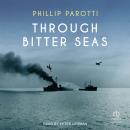
"'In war novels authors typically feature ships such as destroyers, battleships, or aircraft carriers, but not support vessels. By focusing on the support vessels, Parotti provides listeners with a different view of the two wars and leaves them with an appreciation for the crafts' significance along with the men who took care of these damaged ships.' —National Maritime Historical Society
Assigned to US Navy Rescue Tug, the ATR-3X, not long after the German surrender in North Africa, Ensign Hal Goff and four other officers must support the Allied invasion of Sicily and Italy, shepherding navy ships to and from the bitter fighting. With the Allied advance finally stopped cold along the Winter Line beneath Monte Cassino, Hal and his ship become part of the grueling invasion of Anzio and the seemingly endless stalemate across Anzio's bloody beaches.
Phillip Parotti's thrilling novel treats his listeners to gripping World War II naval action in the Mediterranean Sea."
Join our community for the latest bookish news, reading recommendations, exclusive opening extracts, author events and competitions. It\'s all free. And enter a monthly draw to win a £50 Gift Card. See past winners here