Browse History audiobooks, listen to samples and when you're ready head over to Audiobooks.com where you can get 3 FREE audiobooks on us
The Most Awful Responsibility: Truman and the Secret Struggle for Control of the Atomic Age
"President Truman’s choice to drop the atomic bomb is the most debated decision in the 20th Century. But what if Truman’s actual decision wasn’t what everyone thinks it was? Eight decades after the bombing of Hiroshima, the conventional narrative is that American leaders had a choice: Invade Japan, which would have cost millions of Allied and Japanese lives, or use the atom bomb in the hopes of convincing Japan to surrender. Truman, the story goes, carefully weighed the pros and cons before deciding that the atomic bomb would be used against Japanese cities, as the lesser of two evils. But nuclear historian Alex Wellerstein argues that is not what happened. Not only did Truman not take part in the decision to use the bomb, but the one major decision that he did make was a very different one — one that he himself did not fully understand until after the atomic bomb was used. And the weight of that decision, and that misunderstanding, became the major reason that atomic bombs have not been used again since World War II. Based on a close reading of the historical record, The Most Awful Responsibility argues that despite his reputation as an ardent defender of the use of the atomic bomb, Truman was in fact deeply antagonistic to nuclear weapons, associating them primarily with the “murder” and “slaughter” of innocent civilians, believing that they never should be used again, and hoping that they would, in his lifetime, possibly be outlawed. Wellerstein makes a startling case that Truman was possibly the most anti-nuclear American president of the twentieth century, but whose ambitions in this area were strongly constrained by the domestic and international politics of the postwar world. This book is a must-read for all who want to truly understand not only why the bomb was dropped on Japan, but also why it has not been used since."
Alex Wellerstein (Author), Tim Campbell (Narrator)
Audiobook
The Highlands and Islands of Scotland: A New History
"A comprehensive and detailed look into the Scottish Highlands. Alistair Moffat tells the extraordinary story of the Highlands in the most detailed book ever written about this remarkable part of Scotland. This is the story of the Highlands and Islands of Scotland as it has never been told before. From the formation of the landscape millions of years ago to the twenty-first century, it brings to life the events and the people who have shaped Highland history, from saints, sinners, and outlaws to monarchs, clan chiefs, and warriors. Highly informative, it mines a wide range of sources, including medieval manuscripts and sagas, poetry, and popular culture. Picts, Romans, Irish missionaries, Vikings, Jacobites, and the flood of emigrants who left to forge new lives abroad are just some of the important players in the drama. As he paints the bigger picture, Alistair Moffat also introduces many key aspects of Highland culture and explores the experience of ordinary Highlanders and Islanders over thousands of years."
Alistair Moffat (Author), Dave Gillies (Narrator)
Audiobook
"Before there was Madonna or Beyoncé, there was Googoosh. For the first time, one of the biggest pop stars of the 20th century tells her remarkable story: her rise to fame in pre-revolution Iran, her arrest and imprisonment, her twenty-year exile, and finally, her triumphant return to the global stage. "My story is not only my story. It's about our past, my country, how it was, what it became, what happened to the people, to artists." What would happen to a country's biggest pop star if religious extremists took control? In the wake of Iran's 1979 Islamic Revolution, singer Googoosh found out. She was ordered by her government to never sing again, and for twenty years, she didn't...until she did. Now, in this lyrical and moving memoir, pop superstar Googoosh unveils her unforgettable journey. From her difficult upbringing in Iran's tumultuous 1950s and '60s to her stardom in the '70s, she reveals what it was like to reach the peak of her career just as the 1979 Islamic Revolution swept the country. Seemingly overnight, she went from being on magazine covers, at film premieres and fashion shows, and constantly on the radio, to targeted by religious clerics. What followed is a harrowing tale of oppression, intimidation, and exile. After more than twenty years—forbidden to sing or speak out—she found her voice at the turn of the millennium, once again on the international stage. Now, inspired by the brave women of Iran on the front lines fighting for their freedoms, Googoosh finally tells her full story, and with it, the story of a country once again on the brink."
Googoosh (Author), tbd (Narrator)
Audiobook
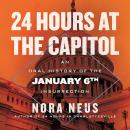
24 Hours at the Capitol: An Oral History of the January 6th Insurrection
"The 24 Hours in Charlottesville author offers a minute-by-minute account of the January 6 riots through never-before-heard stories of those who were there Neus goes beyond mainstream reporting to reveal important truths about the US white nationalist movement This bracing account reconstructs what it was actually like in and around the Capitol during those 24 hours. - Lawmakers recount donning gas masks and being evacuated to safe rooms. - Police officers recall insurrectionists screaming at them and calling them traitors. - Staffers remember "walking over pools of blood" as they ran for their lives. - A young Asian-American staffer recalls locking herself in a room just feet from the rioters, mentally preparing to be raped. - A mostly Black janitorial staff began cleaning the blood of insurrectionists off the marble floor on the Capitol before the building was even officially secured. Neus's sources include original interviews, court documents, firsthand accounts, the US Capitol Historical Society's oral history project on the insurrection, and the work of Tim Heaphy, chief investigator of the congressional January 6 Select Committee. January 6 was largely planned right out in the open, but lawmakers and government officials underestimated the threat in part because it was coming from white people. Neus examines the underlying racial implications of not only the attack itself, but also in the planning and coordination of the response."
Nora Neus (Author), Amara Jasper (Narrator)
Audiobook
The Seventymile Kid: The Lost Legacy of Harry Karstens and the First Ascent of Mount McKinley
"The Seventymile Kid tells the remarkable account of Harry Karstens, who was the actual—if unheralded—leader of the Hudson Stuck Expedition that was the first to summit Mount McKinley in Alaska. All but forgotten by history, a young Karstens arrived in the Yukon during the 1897 Gold Rush, gained fame as a dog musher hauling U.S. Mail in Alaska, and eventually became the first superintendent of Mount McKinley National Park (now known as Denali National Park and Preserve). Aided by Karstens's own journals, longtime Denali writer and photographer Tom Walker uncovered archival information about the Stuck climb, and reveals that the Stuck 'triumph' was an expedition marred by significant conflict. Without Karstens's wilderness skills and Alaska-honed tenacity, it is quite possible Hudson Stuck would never have climbed anywhere near the summit of McKinley. Yet the two men had a falling out shortly after the climb and never spoke again. In this book, Walker attempts to set the record straight about the historic first ascent itself, as well as other pioneer attempts by Frederick Cook and Judge Wickersham. Fans of Alaska literature, American history, and mountaineering lore will love this adventurous biography of the largerthan-life 'sourdough' Karstens, in which Alaska—its wilderness, its iconic mountain, and its pioneer spirit—looms large."
Tom Walker (Author), Basil Sands (Narrator)
Audiobook
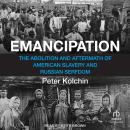
Emancipation: The Abolition and Aftermath of American Slavery and Russian Serfdom
"In this sequel to his landmark study, historian Peter Kolchin compares the transition to freedom after American emancipation with the Russian Great Reforms The two largest transitions from unfree to free labor of the many that occurred in Europe and the Americas during the nineteenth century took place in the United States and in Russia. Both occurred in the 1860s, and in both the former slaves and serfs strove to maximize their autonomy and freedom while the former masters worked to preserve as many of their prerogatives as possible. Both were partially—but only partially—successful. In this magisterial and long-awaited work, historian Peter Kolchin shows that a more radical break with the past was possible in the United States than in Russia, with the Southern freed people coming to enjoy republican citizenship, whereas Russian peasants remained subjects rather than citizens. Both countries saw conservative reactions triumph in the late nineteenth century. While this conservatism was common in most emancipations, it was especially strong in Russia and the American South, in part as a reaction against the major efforts to restructure the social order that went by the name of Reconstruction in the United States and the Great Reforms in Russia."
Peter Kolchin (Author), Keith Brown (Narrator)
Audiobook
A Danger to the Minds of Young Girls: Margaret C. Anderson, Book Bans, and the Fight to Modernize Li
"The definitive biography of overlooked queer icon Margaret C. Anderson, whose fight to publish James Joyce's Ulysses led to her arrest and trial for obscenity. Perfect for fans of The Editor and The Book-Makers. Already under fire for publishing the literary avant-garde into a world not ready for it, Margaret C. Anderson's cutting-edge magazine The Little Review was a bastion of progressive politics and boundary-pushing writing from then-unknowns like T.S. Eliot, Ezra Pound, William Butler Yeats, and Djuna Barnes. And as its publisher, Anderson was a target. From Chicago to New York and Paris, this fearless agitator helmed a woman-led publication that pushed American culture forward and challenged the sensibilities of early 20th century Americans dismayed by its salacious writing and advocacy for supposed extremism like women's suffrage, access to birth control, and LBGTQ rights. But then it went too far. In 1921, Anderson found herself on trial and labeled "a danger to the minds of young girls" by a government seeking to shut her down. Guilty of having serialized James Joyce's masterpiece Ulysses in her magazine, Anderson was now not just a publisher but also a scapegoat for regressives seeking to impose their will on a world on the brink of modernization. Author, journalist, and literary critic Adam Morgan brings Anderson and her journal to life anew in A Danger to the Minds of Young Girls, capturing a moment of cultural acceleration and backlash all too familiar today while shining light on an unsung heroine of American arts and letters. Bringing a fresh eye to a woman and a movement misunderstood in their time, this biography highlights a feminist counterculture that audaciously pushed for more during a time of extreme social conservatism and changed the face of American literature and culture forever."
Adam Morgan (Author), TBD (Narrator)
Audiobook
Patton and the Battle for Sicily: The General, The Navy, and Operation Husky
"The largest amphibious assault to date came at a crucial moment, and the planning and execution presented many conflicts for the Allies. Despite the success of Operation Torch in North Africa, the United States was still considered not fully tested or trusted by their British partners, and Stalin was clamoring for the Allies to open a second front to take the pressure off his Soviet Union. Patton's dreams of martial glory and his desire to best his chief Allied rival, General Bernard Montgomery, head of the British Eighth Army, to the ultimate prize—the port of Messina—often clouded his judgment. His primary motivation was to prove to 'Monty' and other British generals that the American soldier was as good, if not better, than his British counterpart. Using Patton's letters and diaries, Whitlock reveals the scathing opinions he held of Montgomery and almost everyone else in the Allied hierarchy. This book chronicles how Husky would prove pivotal for both sides. Whitlock makes the case that Husky caused the downfall of Benito Mussolini and the neutralization of fascist Italy, and opened the second front to help Stalin. The fight for Sicily proved the worth of American soldiers and seamen. Lessons learned from Husky would be integrated into the Operation Overlord plan launched against France's Normandy coast the following year."
Flint Whitlock (Author), James D. Sasser (Narrator)
Audiobook
The Finnish Front Line: Kekkonen, Kennedy, and Khrushchev’s Cold War Showdown
"The Finnish Front Line is a historical biography of Urho Kekkonen, the eighth and longest-serving president of Finland. Gordon F. Sander focuses on Kekkonen's pivotal first term as president, which was bracketed by two crises that together formed the template for both Finland's relationship with the Soviet Union from 1956 through the fall of the USSR, and Kekkonen's own 'special' relationship with Moscow: the Night Frost crisis of 1957, which derived from the Kremlin's desire to exert greater influence on Finnish politics, and the Note Crisis of 1961, which coincided with the great Berlin crisis of 1961, and occurred when Moscow suddenly invoked the clause in the 1948 Finnish-Soviet treaty that entitled the Kremlin to call for mutual discussions between the Finnish and Soviet militaries and was perceived as a threat to Finnish independence. Thinking this might presage a Soviet invasion of Finland, a distressed Kekkonen was able to resolve the crisis by flying to Siberia to meet with his erstwhile friend Nikita Khrushchev—who may well have precipitated the crisis in order to insure Kekkonen's reelection. This book centers on an overlooked chapter of the Cold War as well as a revealing chapter of the presidency of John Kennedy and his secret offer to help Kekkonen, which he later rejected, ultimately to avoid making Finland into the next front of the Cold War."
Gordon F. Sander (Author), Rich Miller (Narrator)
Audiobook
American Contradiction: Revolution and Revenge from the 1950s to Now
"How did Americans come to elect Barack Obama—and then Donald Trump? Those choices capture what Paul Starr calls the American contradiction. The whole truth about America, Starr argues in this new history of the United States since the 1950s, has never been contained in one consistent set of values or interests. Our nation was born in the contradiction between freedom and slavery. Today it is beset by a contradiction between a changing people and a resisting nation, a nation with entrenched institutions that have empowered those who fear the changes and look to restore an old America of their imagining. Starr tells this history from the dual standpoints of the progressive movements that changed the American people and of the movements that emerged in response. Black Americans, he argues, served as a model minority, setting in motion America’s twentieth-century revolutions in gender as well as race and rights. With industry’s decline and the rise of economic inequality, millions of Americans have felt dispossessed and want the old America back. Trump is their revenge. American Contradiction tells the story of how 1950s America became the almost unrecognizable America of the 2020s."
Paul Starr (Author), Mark Bramhall (Narrator)
Audiobook
"An American Tale has descriptive copy which is not yet available from the Publisher."
Lauren Michele Jackson (Author), Tbd (Narrator)
Audiobook
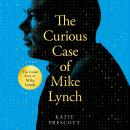
The Curious Case of Mike Lynch: The Improbable Life & Death of a Tech Billionaire
"Read by the author, Katie Prescott. Mike Lynch was a maverick outsider in the British business world. From humble beginnings, Lynch rose to become one of the UK's richest men, selling his home-grown enterprise software company Autonomy to Hewlett-Packard for over £11bn in 2011. The sale triggered one of the biggest fraud cases in Silicon Valley history, as HP accused him of cooking the company's books. Lynch was sent to the US in handcuffs, his reputation in tatters - but was acquitted by a US jury, and returned home a free man. Tragically, his second chance at life was snatched away even as he was celebrating his freedom. In a freak accident, his yacht sunk off the coast of northern Sicily in August 2024, taking the lives of Lynch, his daughter and five others. Shockingly, the co-defendant in the US trial, Autonomy accountant Stephen Chamberlain, was killed hours before Lynch, hit by a car in Cambridge. It was almost thirteen years to the day since the deal between HP and Autonomy was signed. Drawing on extensive research and exclusive access to key sources, The Curious Case of Mike Lynch follows the billionaire's dramatic rise and fall and, finally, his untimely and tragic death. It's a thrilling story of money, power and deception, taking readers into a high-stakes world of corporate subterfuge and rivalries, zigzagging through the hallowed confines of Cambridge across the cut-throat streets of the City of London to Silicon Valley. In this pacy, no-holds barred investigation into one of the most fascinating men in the history of British business, award-winning Times journalist Katie Prescott reflects on Lynch's legacy, outlining lessons from a truly unique life which serve as both a warning and inspiration for us all."
Katie Prescott (Author), Katie Prescott (Narrator)
Audiobook
©PTC International Ltd T/A LoveReading is registered in England. Company number: 10193437. VAT number: 270 4538 09. Registered address: 157 Shooters Hill, London, SE18 3HP.
Terms & Conditions | Privacy Policy | Disclaimer
Join our community for the latest bookish news, reading recommendations, exclusive opening extracts, author events and competitions. It\'s all free. And enter a monthly draw to win a £50 Gift Card. See past winners here
Join Our Community