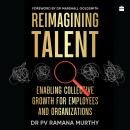
"The world over, boards, CEOs, CHROs and top managements are united in their belief that managing talent is one of the most important aspects of running any business. And yet there seems to be no clarity on what constitutes 'talent' and how one should identify and nurture it. Traditional tools such as bell curves, nine-block grids, potential assessments, etc., often create more frustration than clarity among employees. At the same time, organizations struggle to identify the 'right' talent and retain them in an environment marked by high volatility and low engagement.
Reimagining Talent challenges and demystifies many of the long-held assumptions about talent in the corporate world. At the very heart of this book is a groundbreaking talent architecture arrived at through solid research and interviews with employees and senior leaders from corporates across diverse regions, including India, the United States of America, Japan, the Middle East, Romania, the United Kingdom and Germany.
It introduces a practical road map-the Three Cs of Talent Enablers: Culture of Oneness, Competitive Adaptability and Complexity-to help organizations move beyond outdated practices and embed genuine talent management into their core business strategy.
Grounded in real-life examples and credible research, Reimagining Talent demonstrates how organizations and employees can unlock their full potential, and help both individuals and businesses grow collectively."
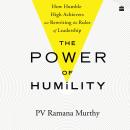
"Humility is interpreted differently in different cultures-as a blend of weakness, meekness and shyness, juxtaposed with kindness and compassion. When we describe Someone as a 'humble' person, we are referring to a person who is a reflection of anodyne blandness: nice, soft, simple, respectful and shy. Is it really that simple?
In an era in which hubris is not just a leitmotif but is openly rewarded in business and society, it is not surprising that when we talk about leadership, humility is the last adjective that comes to mind. Commonly, leadership is associated with charisma, aggression and often naked ambition. Is there a relation between humility and high achievement? Are leaders born with humility or is it an acquired trait? Can humble leaders inspire employees to perform better? Is humility a sign of weakness or a strength in leaders?
For over three decades, Dr PV Ramana Murthy has been a curious student of leadership. In The Power of Humility, he explores this subject in detail. A result of over five years of rigorous first-hand research and numerous interviews with business leaders, the book provides a fresh perspective on how humble high achievers are rewriting the rules of leadership. In the process, it not only addresses the importance of humility, as a cognitive and affective skill for leaders, but also builds a unique framework-a powerful manual of sorts-which current and future leaders can use to emulate in their professional careers."
Join our community for the latest bookish news, reading recommendations, exclusive opening extracts, author events and competitions. It\'s all free. And enter a monthly draw to win a £50 Gift Card. See past winners here