Buy from our bookstore and 25% of the cover price will be given to a school of your choice to buy more books. *15% of eBooks.
Audiobooks by Publius Cornelius Tacitus
Browse audiobooks by Publius Cornelius Tacitus, listen to samples and when you're ready head over to Audiobooks.com where you can get 3 FREE audiobooks on us
"Sitten, Stämme & Stolz – Tacitus' Klassiker über das alte Germanien, gesprochen von Jürgen Fritsche.
Über das Hörbuch:
Wie sahen die Römer die Völker nördlich des Limes? In 'Die Germania' liefert Publius Cornelius Tacitus ein einzigartiges ethnografisches Porträt der germanischen Stämme. Der römische Historiker beschreibt Bräuche, Gesellschaftsstrukturen und Charaktereigenschaften – teils bewundernd, teils kritisch.
Tacitus' Darstellung ist geprägt von Staunen, Klischees und politischem Kalkül – aber auch von echtem Interesse an einer Kultur, die dem römischen Imperium fremd, rau und faszinierend erschien.
Ein frühes kulturhistorisches Dokument – eindrucksvoll, aufschlussreich & überraschend aktuell.
Gesprochen von Jürgen Fritsche – sachlich, klar & mit Gespür für antike Rhetorik.
Warum dieses Hörbuch?
- Römische Geschichtsschreibung & Ethnografie
- Themen: Kulturkontakt, Identität, Fremdbild
- Ungekürzte Lesung – verständlich, eindrücklich & authentisch
- Ideal für Hörer von Geschichte, Antike & politischer Theorie
Jetzt als vollständiges Hörbuch – präzise, historisch & mit Blick auf unsere Wurzeln.
(P)2018 BÄNG Management & Verlags GmbH & Co. KG"
"Wie war es damals im rauhen Germanien - gesehen aus dem Blickwinkel eines Römers? Publius Cornelius Tacitus beschreibt dies in seinem Klassiker - und wir erfahren von so mancher überraschenden Charaktereigenschaft unserer Vorfahren!"
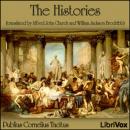
"The Histories was written between 110 and 100 B.C. It covered the Year of Four Emperors following the downfall of Nero, the rise of Vespasian, and the rule of the Flavian Dynasty up to the death of Domitian.
Only the first four books and 26 chapters of the fifth book have survived, covering the year 69 and the first part of 70. The work is believed to have continued up to the death of Domitian on September 18, 96. As a prelude to the account of Titus's suppression of the Great Jewish Revolt, Book 5 features a short ethnographic survey of the ancient Jews as seen from the Roman point of view. (Summary adapted from Wikipedia.)"
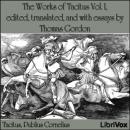
"The historical works of Tacitus are a history of the period from A.D. 14 to 96 in thirty volumes. Although many of the works were lost (only books 1-5 of the Histories and 1-6 and 11-16 of the Annals survive), enough remains to provide a good sense of Tacitus's political and moral philosophy.
He recognized the necessity for strong rulers but argued that more should be done to manage the succession of power and allow for the ascension of talent. Tacitus asserted that it was the dynastic ambitions of Rome's many emperors that caused the decline of moral and political life and precluded the possibility of recruiting leaders of real ability. Moreover, the dynastic temptation caused political instability because military force was now required for political change. His works point to the necessity of systematic institutional restraints on power for the preservation of liberty.
Gordon's translation and his lengthy Discourses on Tacitus bring Tacitus' ideas up to date and apply them to the British state of the early 18th century. (Description from Online Library of Liberty)"
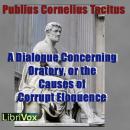
"The scene of the Dialogus de Oratoribus, as this work is commonly known, is laid in the sixth year of Vespasian, 75 a.D. The commentators are much divided in their opinions about the real author; his work they all agree is a masterpiece in the kind; written with taste and judgement; entertaining, profound, and elegant. It is normally considered to have been written by Tacitus, even though some ascribe it to Quintilian. The main subject is the decadence of oratory, for which the cause is said to be the decline of the education, both in the family and in the school, of the future orator. In a certain way, it can be considered a miniature art of rhetoric. (Summary by Leni)"
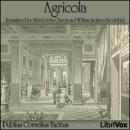
"The Agricola (Latin: De vita et moribus Iulii Agricolae, lit. On the life and character of Julius Agricola) is a book by the Roman historian Tacitus, written c 98, which recounts the life of his father-in-law Gnaeus Julius Agricola, an eminent Roman general. It also covers, briefly, the geography and ethnography of ancient Britain. As in the Germania, Tacitus favorably contrasts the liberty of the native Britons to the corruption and tyranny of the Empire; the book also contains eloquent and vicious polemics against the rapacity and greed of Rome. This translation by Alfred John Church and William Jackson Brodribb, was first published in 1877. (Summary from Wikipedia.)"
"The Germania (Latin: De Origine et situ Germanorum, literally The Origin and Situation of the Germans), written by Gaius Cornelius Tacitus around 98, is an ethnographic work on the Germanic tribes outside the Roman Empire. Germania fits squarely within the tradition established by authors from Herodotus to Julius Caesar. Tacitus himself had already written a similar essay on the lands and tribes of Britannia in his Agricola. The Germania begins with a description of the lands, laws, and customs of the Germanic people; it then segues into descriptions of individual tribes, beginning with those dwelling closest to Roman lands and ending on the uttermost shores of the Baltic, among the amber-gathering Aesti, the primitive and savage Fenni, and the unknown tribes beyond them."
"The Annals was Tacitus' final work, covering the period from the death of Augustus Caesar in the year 14. He wrote at least 16 books, but books 7-10 and parts of books 5, 6, 11 and 16 are missing. Book 6 ends with the death of Tiberius and books 7-12 presumably covered the reigns of Caligula and Claudius. The remaining books cover the reign of Nero, perhaps until his death in June 68 or until the end of that year, to connect with the Histories. The second half of book 16 is missing, ending with the events of the year 66. We do not know whether Tacitus completed the work or whether he finished the other works that he had planned to write; he died before he could complete his planned histories of Nerva and Trajan, and no record survives of the work on Augustus Caesar and the beginnings of the Empire with which he had planned to complete his work as an historian. (Summary from Wikipedia.)"
"The Annals was Tacitus' final work, covering the period from the death of Augustus Caesar in the year 14. He wrote at least 16 books, but books 7-10 and parts of books 5, 6, 11 and 16 are missing. Book 6 ends with the death of Tiberius and books 7-12 presumably covered the reigns of Caligula and Claudius. The remaining books cover the reign of Nero, perhaps until his death in June 68 or until the end of that year, to connect with the Histories. The second half of book 16 is missing, ending with the events of the year 66. We do not know whether Tacitus completed the work or whether he finished the other works that he had planned to write; he died before he could complete his planned histories of Nerva and Trajan, and no record survives of the work on Augustus Caesar and the beginnings of the Empire with which he had planned to complete his work as an historian. (Summary from Wikipedia.)"
"The Annals was Tacitus' final work, covering the period from the death of Augustus Caesar in the year 14. He wrote at least 16 books, but books 7-10 and parts of books 5, 6, 11 and 16 are missing. Book 6 ends with the death of Tiberius and books 7-12 presumably covered the reigns of Caligula and Claudius. The remaining books cover the reign of Nero, perhaps until his death in June 68 or until the end of that year, to connect with the Histories. The second half of book 16 is missing, ending with the events of the year 66. We do not know whether Tacitus completed the work or whether he finished the other works that he had planned to write; he died before he could complete his planned histories of Nerva and Trajan, and no record survives of the work on Augustus Caesar and the beginnings of the Empire with which he had planned to complete his work as an historian. (Summary from Wikipedia.)"
Join our community for the latest bookish news, reading recommendations, exclusive opening extracts, author events and competitions. It\'s all free. And enter a monthly draw to win a £50 Gift Card. See past winners here


![[German] - Die Germania.: Hörbuchzeit: Klassiker der Weltliteratur Audiobook](https://covers.audiobooks.com/images/covers/large/9783754519530.jpg)
![[German] - Publius Cornelius Tacitus: Die Germania: Ungekürzte Lesung Audiobook](https://covers.audiobooks.com/images/covers/large/9783955975098.jpg)