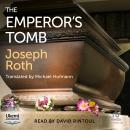
"Untethered by the collapse of the Austro-Hungarian Empire and, with it, the dwindling of his family’s name, Franz Ferdinand Trotta has few ambitions beyond frequenting the cafes and bars of Vienna. But in a rapidly changing and violent age, disinterest is not an option: as the first intimations of Nazi barbarities merge, Franz Ferdinand is drawn, inexorably, into the coming storm.
Vivid and prophetic, Roth’s acclaimed novel is a stirring reflection on the passing of time, youth and disillusionment, and an elegy to a lost Europe.
The Emperor’s Tomb is the sequel to The Radetzky March, one of the great masterpieces of 20th century German literature with some characters, and the narrative thread occasionally overlapping. It was written in the last period of Roth’s life, and though different in character – not least because it is told in first person – the shadow of the darkening colours of the end of an era is maintained.
It is especially evocative in the exemplary and atmospheric translation by Michael Hofmann and the tone of David Rintoul’s reading.
‘Unforgettable, really great literature’ – William Boyd.
‘The carefully wrought work of a poet in full sympathy with his subject and his subject matter, in all its rootlessness, melancholy and ironic brevity.’ Economist"
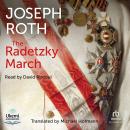
"Set during the doomed splendour of the Austro-Hungarian Empire, The Radetzky March tells the story of the celebrated Trotta family, tracing their rise and fall over three generations. Theirs is a sweeping history of heroism and duty, desire and compromise, tragedy and heartbreak, a story that lasts until the darkening eve of WWI, when all is set to fall apart. A rich and luminous masterpiece, moving, compassionate, witty and dramatic, The Radetzky March is one of the great reading pleasures of 20th-century literature. It is especially powerful in this translation by Michael Hofmann.
'For sheer, epic sweep, I love reading The Radetzky March by Joseph Roth, set in imperial Vienna. I can't recommend it highly enough' Jeremy Paxman
'Timeless... I re-read this book every two or three years, captivated anew by its low-key melancholia and its wry take on the human predicament' William Boyd, Mail on Sunday"
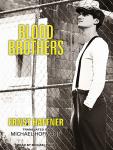
"Blood Brothers is the only known novel by German social worker and journalist Ernst Haffner, of whom nearly all traces were lost during the course of World War II. Told in stark, unsparing detail, Haffner’s story delves into the illicit underworld of Berlin on the eve of Hitler’s rise to power, describing how these blood brothers move from one petty crime to the next, spending their nights in underground bars and makeshift hostels, struggling together to survive the harsh realities of gang life, and finding in one another the legitimacy denied them by society."
Join our community for the latest bookish news, reading recommendations, exclusive opening extracts, author events and competitions. It\'s all free. And enter a monthly draw to win a £50 Gift Card. See past winners here