"The Last Courtesan was his mother's story. Nautch Boy tells his own.
'A one-of-a-kind book. It takes a ferocious spirit to survive the saddest alleys of the world - and an extraordinary man to narrate it. I consider this book sacred. It is consecrated with my bleeding heart.' - K.R. Meera, Author
'Almost a war, but with a lot of hope. Rekhabai is weak and strong, ferocious and gentle, angry and generous. Manish Gaekwad, with a style as simple as his mother's heart and as complex as her life, has compelled us to read without a break.' - Volga, Author & Activist
'One outstanding book, this. Take a bow.' - Anita Nair, Author
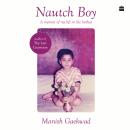
A sweet-faced, quiet boy dressed in matching pink shorts and a top poses demurely for a photograph in a kotha, holding a flower vase with plastic white daisies in it. Powdered, scented women around him sparkle and pirouette like movie stars on the silver screen. The boy looks at them in awe. Will he be able to join them in this evening of glamour and music? When will he become a nautch boy?
His dream is jinxed by his courtesan mother Rekhabai's ambition to secure his future away from every last thing that ties him to the kotha. But can he silence the music in his veins?
Sent off to a boarding school in the hills, the boy learns to balance the two worlds-he can undulate his hips to popular Hindi songs like his mother but also recite by heart the poems of Rossetti and Shelley.
Nautch Boy is Manish Gaekwad's account of being born and raised in a disrespected environment at odds with his privileged education. He finds his vocation as a reporter, screenwriter and a novelist, and eventually replaces that flower vase of fake white daisies with colourful stories of love, laughter and decay from the kothas."
"The 1993 Bow Bazaar bomb blast in Calcutta brought an end to the kothas in the busy commercial district. Over the next few years, as dance bars and disco music replaced the old-world charm of mujras, kathak and thumri, the tawaifs began to abandon the profession. Rekhabai, a courtesan, found herself at a crossroads, facing an uncertain future. Where should she go? What should she do next?
Originally from the Kanjarbhat tribe, Rekhabai was sold and trained as a tawaif while she was still a child. In the 1980s, when kothas were no longer recognized as centres for aesthetics, and society disapproved of the tawaif's art, as they felt it was sex work in the guise of adakari (performance), Rekhabai made a name for herself in Calcutta and Bombay as a singing-dancing star. It was an era when she had to dodge guns, goons and Ghalib's ghazals to carve out her own destiny, provide for her large family and raise her son in an English-medium boarding school.
In this poignant memoir, she narrates the unbelievable story of her survival to her son with candour, grace and humour, never missing a beat and always full of heart."
Join our community for the latest bookish news, reading recommendations, exclusive opening extracts, author events and competitions. It\'s all free. And enter a monthly draw to win a £50 Gift Card. See past winners here