"*** Finalist for the PEN/Diamonstein-Spielvogel Award for the Art of the Essay****
****Semi-Finalist for the Thurber Prize for American Humor****
****Finalist for the New England Book Award****
****Longlisted for the Massachusetts Book Award****
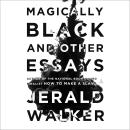
In this engaging follow up to How to Make a Slave and Other Essays, the recipient of PEN New England Award for nonfiction and finalist for the National Book Award sharply examines and explains Black life and culture with equal parts candor and humor.
In Magically Black and Other Essays Jerald Walker elegantly blends personal revelation and cultural critique to create a bracing and often humorous examination of Black American life. He thoughtfully addresses the inherent complexities of topics as eclectic as incarceration, home renovations, gentrification, the crip walk, pimping, and the rise of the MAGA movement, approaching them through various Black perspectives, including husband, father, teacher, and writer. The collection's overarching theme is captured in the titular essay, which examines the culture of heroic action African Americans created in response to their enslavement and oppression, giving proof to Albert Murray's observation that the "fire in the forging process . . . for all its violence, does not destroy the metal that becomes the sword.""
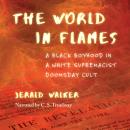
"A lively memoir of growing up with blind African American parents in a segregated cult preaching the imminent end of the world-for fans of James McBride's The Good Lord Bird.
It's 1970, and Jerry Walker is six years old. His consciousness revolves around being a member of a church whose beliefs he finds not only confusing but terrifying. Composed of a hodgepodge of requirements and restrictions-including a prohibition against doctors and hospitals-the underpinning tenet of Herbert W. Armstrong's Worldwide Church of God was that its members were divinely chosen and all others would soon perish in rivers of flames.
The substantial membership was ruled by fear, intimidation, and threats. Anyone who dared leave the church would endure hardship for the remainder of this life and eternal suffering in the next. The next life, according to Armstrong, would arrive in 1975, three years after the start of the Great Tribulation. Jerry would be eleven years old.
Jerry's parents were particularly vulnerable to the promise of relief from the world's hardships. When they joined the church, in 1960, they were living in a two-room apartment in a dangerous Chicago housing project with the first four of their seven children, and, most significantly, they both were blind, having lost their sight to childhood accidents. They took comfort in the belief that they had been chosen for a special afterlife, even if it meant following a religion with a white supremacist ideology and dutifully sending tithes to Armstrong, whose church boasted more than 100,000 members and more than $80 million in annual revenues at its height.
When the prophecy of the 1972 Great Tribulation does not materialize, Jerry is considerably less disappointed than relieved. When the 1975 end-time prophecy also fails, he finally begins to question his faith and imagine the possibility of choosing a destiny of his own."
Join our community for the latest bookish news, reading recommendations, exclusive opening extracts, author events and competitions. It\'s all free. And enter a monthly draw to win a £50 Gift Card. See past winners here