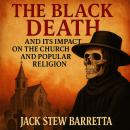
"This book concerns the religious impact of the Black Death. This plague devastated Europe in the fourteenth century. It examines the impact of the Black Death on the Catholic Church and the religious movements that arose in response to it. The conclusions drawn here are based on the research of both primary and secondary sources. The Church played a significant role during the Middle Ages because religion was an essential aspect of daily life for European Christians. When the Black Death struck Europe in 1347, the Church struggled to cope with the plague’s damaging consequences, and its reputation suffered as a result. This book concludes that the Black Death contributed to a decline in the confidence and faith of the Christian laity towards the Church and its leadership. The scope of this book focuses on the plague’s impact on the clergy, the rise of the flagellant movement, and the widespread Jewish persecutions that ensued in the wake of the epidemic. The Black Death was a pivotal event in the history of Western society, with profound cultural and demographic consequences. Its impact on the Church and religion within the medieval community justifies the study of this topic."
"This audiobook is narrated by an AI Voice.
Many doctors in Germany were convinced that they were the chosen people to create a healthy, racially pure Volkskörper (body of people) and by doing so, establish a racial utopia. As strong supporters of National Socialism, they welcomed the founding of the Third Reich. After Hitler acceded to power, German physicians joined the SS in particular. During the twelve years of the Nazi era, seven percent of German doctors became members of the SS. The average membership of the population was only 0.6 percent. Moreover, doctors were also overrepresented as a profession, with teachers consisting of less than half a percent and musicians only three percent. Only lawyers had a larger share in the SS than doctors.
The average income of German doctors increased extremely after 1933, even exceeding the income of lawyers. The Nazi doctors of the human experiments also joined the SS in large numbers. German doctors were far more reluctant to join the NSDAP than the SS. Before 1933, only seven percent of all German doctors joined the NSDAP (Nazi party). They joined the party when it seemed opportune to do so, in 1933, and particularly in 1937. In 1933, physicians made up almost a quarter of all academic professionals in the NSDAP. Most doctors joined the NSDAP in 1937, with a membership rate of 43 percent of the total profession. German physicians sat on the fence during the first years of the Nazi era, insecure about the effects of the new regime on their profession. By 1937, the Third Reich had won the trust of several reasons. The NSDAP had solved the economic crisis and had reorganized the medical profession. Moreover, the regime had solved “the Jewish question” in the medical sector."
"In the name of humanity, that was the explanation of Dr. Claus Karl Schilling for the execution of malaria experiments on 1,200 inmates of the Dachau concentration camp during the Second World War. The reputable Schilling had come to Dachau with the personal permission of the Reichsführer-SS Heinrich Himmler in 1942 because he could use the prisoners as research subjects without the restriction of obtaining their consent. Schilling was not an exception.
Many Nazi doctors seized the unique opportunity to execute human experiments without legal and ethical restrictions during the war. The SS and the Wehrmacht either initiated or supported the research of the Nazi doctors. The central question that puzzled jurists and scientists is how these doctors, who were educated to heal people, could execute human experiments and deliberately harm and even kill people. To some scientists, their acts stand out as ‘exemplars of evil.’ This judgment is based on the fact that prisoners did not give their informed consent, the cruel and sometimes sadistic character of the experiments, and because never before in medical experiments was the death of the research subjects a central element of the research design. Many people think that ‘science went mad’ in the Third Reich and that Nazi doctors who committed these crimes were pseudo-scientists, sadists, and even monsters. However, thinking these perpetrators were madmen or monsters is a false explanation.
It is confronting to know that physicians belonging to the most advanced medical community in the world at the time, who had sworn to ‘do no harm, ' could commit these crimes.
On this trail, Dr. Josef Mengele’s pseudo-scientific research at the Auschwitz concentration camp during World War II led to immeasurable suffering among the camp’s children."
Join our community for the latest bookish news, reading recommendations, exclusive opening extracts, author events and competitions. It\'s all free. And enter a monthly draw to win a £50 Gift Card. See past winners here