Browse audiobooks by George Berkeley, listen to samples and when you're ready head over to Audiobooks.com where you can get 3 FREE audiobooks on us
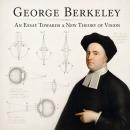
An Essay Towards A New Theory Of Vision
"This audiobook is narrated by an AI Voice. State-of-the-art voice generation technology, combined with careful human editing, has been employed in this production of 'An Essay Towards A New Theory Of Vision' by George Berkeley in order to make this important text more widely accessible to modern audiences. Listeners are invited to explore the audio sample and judge the quality for themselves. First published in 1709, Berkeley’s Essay is a landmark in the philosophy of perception. Its central claim is that we do not immediately see distance, depth, or three-dimensional space. Instead, vision presents signs (colors, lights, shapes, and appearances) that we learn to connect with touch, movement, and bodily action. What seems obvious to sight is, for Berkeley, the result of habit, association, and interpretation. Before developing his immaterialism in the 'Principles of Human Knowledge' and the 'Three Dialogues', Berkeley uses vision to question what is truly given in perception. The work prepares his critique of abstract ideas, his challenge to mind-independent matter, and his idea that the natural world functions like a language through which God guides human beings. Although modern vision science has moved far beyond Berkeley’s specific explanations, the questions he raises remain deeply relevant. His view of perception as learned, practical, and action-oriented anticipates later concerns in pragmatism, where meaning is tied to use and experience, and in phenomenology, where perception is understood through embodiment and our lived relation to the world. His emphasis on the coordination of sight, touch, and movement also resonates with contemporary cognitive science and theories of embodied perception. For listeners interested in philosophy, psychology, or the history of ideas, 'An Essay Towards A New Theory Of Vision' remains a concise and provocative starting point for thinking about how we come to experience the world."
George Berkeley (Author), AI Voice Daniel (Narrator)
Audiobook
Three Dialogues Between Hylas and Philonous
"This audiobook is narrated by a digital voice. First published in 1713, this work was designed as a vivid and persuasive presentation of the remarkable picture of reality that Berkeley had first presented two years earlier in his Principles of Human Knowledge. His central claim there, as here, was that physical things consist of nothing but ideas in minds-- that the world is not material but mental. Berkeley uses this thesis as the ground for a new argument for the existence of God, and the dialogue form enables him to raise and respond to many of the natural objections to his position."
George Berkeley (Author), Digital Voice Martin G (Narrator)
Audiobook
"This audiobook is narrated by a digital voice. Through reflection or introspection, is it possible to attempt to know if a sound, shape, movement, or color can exist unperceived by a mind? This book largely seeks to refute the claims made by Berkeley's contemporary John Locke about the nature of human perception. Both Locke and Berkeley agreed that there was an outside world, and it was this world which caused the ideas one has within one's mind. Berkeley sought to prove that the outside world was also composed solely of ideas."
George Berkeley (Author), Digital Voice Martin G (Narrator)
Audiobook
Three Dialogues between Hylas and Philonous
"Berkeley uses the Socratic mode of inquiry in Three Dialogues between Hylas and Philonous to question fundamental beliefs about knowledge and reality. These dialogues are between Hylas (whose name is derived from the ancient Greek word for matter) and Philonous, whose name means “lover of mind.” The new physical sciences developed in the seventeenth century supported the materialism proposed by Thomas Hobbes and several other philosophers. This worldview proclaimed that all of reality consists of nothing but matter in motion, thus promoting atheism and ethical skepticism. The implications for politics, ethics, and religion caused concern among leading intellectuals in the eighteenth century. Whatever the value of the positive claims presented in this work, Berkeley foreshadows the philosophical impact of twentieth century physics, which challenges the foundations of such materialism and calls for a better understanding of both the physical and the mental aspects of reality"
George Berkeley (Author), Ray Childs (Narrator)
Audiobook
Berkeley’s Three Dialogues between Hylas and Philonous
"Berkeley uses the Socratic mode of inquiry in 'Three Dialogues between Hylas and Philonous' to question fundamental beliefs about knowledge and reality. These dialogues are between Hylas (whose name is derived from the ancient Greek word for matter) and Philonous, whose name means 'lover of mind.' The new physical sciences developed in the seventeenth century supported the materialism proposed by Thomas Hobbes and several other philosophers. This worldview proclaimed that all of reality consists of nothing but matter in motion, thus promoting atheism and ethical skepticism. The implications for politics, ethics, and religion caused concern among leading intellectuals in the eighteenth century. Whatever the value of the positive claims presented in this work, Berkeley foreshadows the philosophical impact of twentieth century physics, which challenges the foundations of such materialism and calls for a better understanding of both the physical and the mental aspects of reality. - Berkeley was born in Ireland where he served as Bishop of Cloyne (Dublin). He published works in philosophy, mathematics, science, and religion. His other works include the 'Treatise Concerning the Principles of Human Knowledge' and 'An Essay Towards a New Theory of Vision'. He is one of the central figures in the tradition known as Empiricism."
George Berkeley (Author), Albert A. Anderson, William Schuller (Narrator)
Audiobook
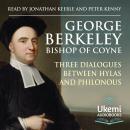
Three Dialogues Between Hylas and Philonous
"Three Dialogues between Hylas and Philonous was the final statement by the empiricist philosopher George Berkeley, Bishop of Coyne, (1685-1753) on his views concerning subjective idealism, couched in the famous statement ‘esse is percipi’ - to be is to be perceived (mixing Latin with a bit of English was Berkeley’s idiosyncrasy!). In his first book on the subject, A Treatise Concerning the Principles of Human Knowledge, Berkeley proposed that the physical world exists only in the experiences minds have of it. It was published in 1710, but encountered robust criticism. In answer to this, Berkeley re-wrote the work in the form of three dialogues, casting himself as Philonous (derived from the Greek ‘lover of the mind’) in debate with Hylas (derived from the Greek for ‘matter’). Set against a world view formed by Newtonian science and philosophers such as John Locke, Berkeley’s was a distinctive attitude: he did not deny that a table existed, but the key concept of it was based on the perceiver’s perspective and experience of it in the mind. In Three Dialogues (set in a ‘Platonic’ garden), Hylas begins by challenging Philonous that he denied the existence of material substance. ‘What!’ says Hylas. ‘Can anything be more fantastical, more repugnant to Common Sense, or a more manifest piece of Scepticism, than to believe there is no such thing as matter?’ And Berkeley in the guise of Philonous replies: ‘Softly, good Hylas. What if it should prove that you, who hold there is, are, by virtue of that opinion, a greater sceptic, and maintain more paradoxes and repugnances to common Sense, than I who believe no such thing.’ And the scene is set for the debate. Philonous emphasises (and persuades Hylas) that it is the mind’s interpretation of what is perceived by the senses that really matters. However, Berkeley still argues for the traditional view of the Christian God as a creator - and, significantly, some eight years after the publication of Three Dialogues, took Holy Orders, and eventually became Bishop of Coyne. Presented here in dialogue form, Berkeley’s most influential work proves an entertaining and stimulating work of philosophy as the two characters come to life in the spirited reading by Jonathan Keeble and Peter Kenny."
George Berkeley (Author), Jonathan Keeble, Peter Kenny (Narrator)
Audiobook
Three Dialogues Between Hylas and Philonous
"Berkeley uses the Socratic mode of inquiry in Three Dialogues Between Hylas and Philonous to question fundamental beliefs about knowledge and reality. These dialogues are between Hylas (whose name is derived from the ancient Greek word for matter) and Philonous, whose name means "lover of mind". The new physical sciences developed in the 17th century supported the materialism proposed by Thomas Hobbes and several other philosophers. This worldview proclaimed that all of reality consists of nothing but matter in motion, thus promoting atheism and ethical skepticism. The implications for politics, ethics, and religion caused concern among leading intellectuals in the 18th century. Whatever the value of the positive claims presented in this work, Berkeley foreshadows the philosophical impact of 20th-century physics, which challenges the foundations of such materialism and calls for a better understanding of both the physical and the mental aspects of reality. © Agora Publications"
George Berkeley (Author), Ray Childs (Narrator)
Audiobook
Three Dialogues between Hylas and Philonous
"Berkeley uses Hylas as his primary contemporary philosophical adversary, John Locke. A Hylas is featured in Greek mythology and the name Hylas is derived from an ancient Greek word for "matter" which Hylas argues for in the dialogues. Philonous translates as "lover of mind." In The First Dialogue, Hylas expresses his disdain for skepticism, adding that he has heard Philonous to have "maintained the most extravagant opinion... namely, that there is no such thing as material substance in the world." Philonous argues that it is actually Hylas who is the skeptic and that he can prove it. Thus, a philosophical battle of wit begins. (Summary from Wikipedia)"
George Berkeley (Author), Geoffrey Edwards (Narrator)
Audiobook
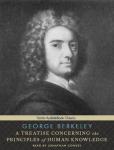
A Treatise Concerning the Principles of Human Knowledge
"First published in 1710, George Berkeley's A Treatise Concerning the Principles of Human Knowledge is a seminal contribution to Empiricist philosophy. Making the bold assertion that the physical world consists only of ideas and thus does not exist outside the mind, this work establishes Berkeley as the founder of the immaterialist school of thought. A major influence on such later philosophers as David Hume and Immanuel Kant, Berkeley's ideas have played a role in such diverse fields as mathematics and metaphysics and continue to spark debate today."
George Berkeley (Author), Jonathan Cowley (Narrator)
Audiobook
©PTC International Ltd T/A LoveReading is registered in England. Company number: 10193437. VAT number: 270 4538 09. Registered address: 157 Shooters Hill, London, SE18 3HP.
Terms & Conditions | Privacy Policy | Disclaimer
Join our community for the latest bookish news, reading recommendations, exclusive opening extracts, author events and competitions. It\'s all free. And enter a monthly draw to win a £50 Gift Card. See past winners here
Join Our Community