Browse audiobooks by American Standard Version, listen to samples and when you're ready head over to Audiobooks.com where you can get 3 FREE audiobooks on us
"“The Books of Samuel (Hebrew: Sefer Sh’muel ספר שמואל) are part of the Tanakh (part of Judaism’s Hebrew Bible) and also of the Christian Old Testament. The work was originally written in Hebrew, and the Book(s) of Samuel originally formed a single text, as they are often considered today in Hebrew bibles. Together with what is now referred to as the Book(s) of Kings, the translators who created the Greek Septuagint divided the text into four books, which they named the Books of the Kingdoms. In the Latin Vulgate version, these then became the Books of the Kings, thus 1 and 2 Samuel were referred to as 1 and 2 Kings, with 3 and 4 Kings being what are called 1 and 2 Kings by the King James Bible and its successors.” (Summary by Wikipedia)"
American Standard Version (Author), Sam Stinson (Narrator)
Audiobook
""Genesis (Greek: "birth", "origin") is the first book of the Hebrew Bible, and the first of five books of the Pentateuch or Torah. It recounts the world from creation to the descent of the children of Israel into Egypt, and contains some of the best-known accounts of the Old Testament, including Adam and Eve, Cain and Abel, Noah's Ark, the Tower of Babel, and the biblical Patriarchs." (From Wikipedia, modified by Sam Stinson)"
American Standard Version (Author), Sam Stinson (Narrator)
Audiobook
""Moses leads the Hebrews out of Egypt and through the wilderness to the Mountain of God: Mount Sinai. There Yahweh, through Moses, gives the Hebrews their laws and enters into a covenant with them, by which he will give them the land of Canaan in return for their faithfulness. The book ends with the construction of the Tabernacle." (Summary by Wikipedia)"
American Standard Version (Author), Sam Stinson (Narrator)
Audiobook
""Deuteronomy (Greek: ?????????????, "second law") or Devarim (Hebrew: ??????????, literally "things" or "words") is the fifth book of the Hebrew Bible, and the fifth of five books of the Jewish Torah/Pentateuch. A large part of the book consists of five sermons delivered by Moses reviewing the previous forty years of wandering in the wilderness, and the future entering into the Promised Land. Its central element is a detailed law-code by which the Israelites are to live within the Promised Land. Theologically the book constitutes the renewing of the covenant between YHWH, the Jewish God, and the 'Children of Israel.'" (Summary by Wikipedia)"
American Standard Version (Author), Sam Stinson (Narrator)
Audiobook
""The Book of Judges (Hebrew: Sefer Shoftim) is a book of the Bible originally written in Hebrew. It appears in the Tanakh and in the Christian Old Testament. Its title refers to its contents; it contains the history of Biblical judges (not to be confused with modern judges), who helped rule and guide the ancient Israelites, and of their times. As Judges stands today, the last judge it mentions is Samson, and although there are two further stories, the traditional view is that Samson's exploits probably synchronise with the period immediately preceding Eli, who was both high priest and judge. Both academic views and traditional thought hence view the narrative of the judges as ending at Samson, picking up again at 1 Samuel 1:1 to consider Eli, and continuing through to 1 Samuel 7:2. As for the stories at the end of the Book, which are set in the same time period as the judges but discuss people other than the judges, there is much affinity between these and the Book of Ruth, and many people believe Ruth originally belonged amongst them. There were thirteen Biblical Judges." (Summary by Wikipedia)"
American Standard Version (Author), Sam Stinson (Narrator)
Audiobook
""The Book of Nehemiah, sometimes called the Second Book of Ezra, is a book of the Hebrew Bible. It is historically regarded as a continuation of the Book of Ezra, and the two are frequently taken together as Ezra-Nehemiah. Traditionally, the author of this book is believed to be Nehemiah himself. The date at which the book was written was probably about 431 - 430 BC, when Nehemiah had returned the second time to Jerusalem after his visit to Persia. The book consists of four parts: (1) An account of the rebuilding of the wall of Jerusalem, and of the register Nehemiah had found of those who had returned from Babylon. Details describe how Nehemiah became governor of Judah; various forms of opposition generated by Sanballat and others; describes earlier return under Zerubbabel (ch. 1-7). (2) An account of the state of religion among the Jews during this time (8-10). (3) Increase of the inhabitants of Jerusalem; the census of the adult male population, and names of the chiefs, together with lists of priests and Levites (11-12:1-26). 4) Dedication of the wall of Jerusalem, the arrangement of the temple officers, and the reforms carried out by Nehemiah (12:27-ch. 13)" (Summary by Wikipedia)"
American Standard Version (Author), Sam Stinson (Narrator)
Audiobook
""Psalms is a book of the Hebrew Bible included in the collected works known as the Writings. Psalms were written by various writers, including Israel's King David. The Book of Psalms is divided into five books: Book 1 -- Psa. 1-41; Book 2 -- Psa. 42-72; Book 3 -- Psa. 73-89; Book 4 -- Psa. 90-106; and Book 5 -- Psa. 107-150. The collection includes the following types of psalm, among others: Psalms for praise, guidance, consolation, recognition of God's creation, the need for repentance. Certain Psalms, such as Psa. 22 and Psa. 110 are accepted by Christians and certain Jews as messianic or containing messianic prophecies." (From Wikipedia, modified by Sam Stinson)"
American Standard Version (Author), Sam Stinson (Narrator)
Audiobook
""The Book of Isaiah (Hebrew: ??? ??????) is a book of the Bible traditionally attributed to the Prophet Isaiah, who lived in the second half of the 8th century BC. In the first 39 chapters, Isaiah prophesies doom for a sinful Judah and for all the nations of the world that oppose God. The last 27 chapters prophesy the restoration of the nation of Israel. This section includes the Songs of the Suffering Servant, four separate passages that Christians believe prefigure the coming of Jesus Christ, and which are otherwise traditionally thought to refer to the nation of Israel. This second of the book's two major sections also includes prophecies of a new creation in God's glorious future kingdom." (Summary from Wikipedia)"
American Standard Version (Author), Sam Stinson (Narrator)
Audiobook
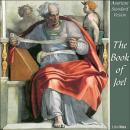
""The Book of Joel is part of the Jewish Tanakh, and also the Old Testament of the Christian Bible. Joel is part of a group of twelve prophetic books known as the Minor Prophets or simply as The Twelve; the distinction 'minor' indicates the short length of the text in relation to the larger prophetic texts by the "Major Prophets" known as the Nevi'im." (Summary by Wikipedia)"
American Standard Version (Author), Sam Stinson (Narrator)
Audiobook
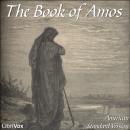
""The Book of Amos is one of the books of the Nevi'im (Hebrew: "prophets") and of the Christian Old Testament. Amos is one of the minor prophets. Amos was the first biblical prophet whose words were recorded in a book, an older contemporary of Hoseah and Isaiah. He was active c 750 BC during the reign of Jeroboam II. He lived and prophesied in the southern kingdom of Judah. His major themes of social justice, God's omnipotence, and divine judgment became staples of prophecy." (Summary by Wikipedia)"
American Standard Version (Author), Sam Stinson (Narrator)
Audiobook
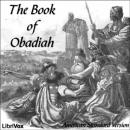
""The Book of Obadiah is found in both the Hebrew Bible and the Old Testament of the Christian Bible, where it is the shortest book, only one chapter long. Its authorship is generally attributed to a person named Obadiah, which means "servant (or worshipper) of the Lord". Obadiah is classified as a "minor prophet" in the Christian Bible due to the brevity of the writing (only 21 verses) and the content (prophetic material). An Old Testament prophet was (professedly) not only a person who was given divine insight into future events, but a person whom the Lord used to declare his word. The first nine verses in the book foretell total destruction in the land of Edom at the hand of the Lord. Obadiah writes that this destruction will be so complete that it will be even worse than a thief who comes at night, for not even a thief would destroy everything. The Lord will allow all allies of Edom to turn away and help chase Edom out of its land. What is the reason for such a harsh punishment? Verses ten through fourteen explain that when Israel (the Lord's chosen people) was attacked, Edom refused to help them, thus acting like an enemy. What is even worse is that Edom and Israel share a common blood line through their founders who were brothers, Jacob and Esau. Because of this gross neglect of a relative, Edom will be covered with shame and destroyed forever. The final verses, fifteen through twenty-one, depict the restoration of Israel and the wiping out of the Edomites. Verse eighteen says that there will be no survivors from the house of Esau once the destruction is complete. Israel will become a holy place and its people will return from exile and inhabit the land once inhabited by the Edomites. The final verse of the prophecy places the Lord as King who will rule over all the mountains of Edom." (Summary from Wikipedia)"
American Standard Version (Author), Sam Stinson (Narrator)
Audiobook
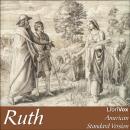
"During the time of the Judges when there was a famine, an Israelite family from Bethlehem - Elimelech, his wife Naomi, and their sons Mahlon and Chilion - emigrate to the nearby country of Moab. Elimelech dies, and the sons marry two Moabite women: Mahlon marries Ruth and Chilion marries Orpah. Then Mahlon and Chilion also die. Naomi decides to return to Bethlehem. She tells her daughters-in-law to return to their own mothers, and remarry. Orpah reluctantly leaves; however, Ruth says, "Don't urge me to leave you or to turn back from you. Where you go I will go, and where you stay I will stay. Your people will be my people and your God my God. Where you die I will die, and there I will be buried. May the LORD deal with me, be it ever so severely, if anything but death separates you and me." (Ruth 1:16-17 NIV) The two women return to Bethlehem. It is the time of the barley harvest, and in order to support her mother-in-law and herself, Ruth goes to the fields to glean. The field she goes to belongs to a man named Boaz, who is kind to her because he has heard of her loyalty to her mother-in-law. Ruth tells her mother-in-law of Boaz's kindness, and she gleans in his field through the remainder of the harvest season. Boaz is a close relative of Naomi's husband's family. He is therefore obliged by the levirate law to marry Mahlon's widow, Ruth, in order to carry on his family line. Naomi sends Ruth to the threshing floor at night and tells her to "uncover the feet" of the sleeping Boaz. Ruth does so, Boaz awakes, and Ruth reminds him that he is "the one with the right to redeem." Boaz is willing to "redeem" Ruth, but there is a closer relative with a stronger right to do so. The next morning, Boaz discusses the issue with this man before the town elders. The other relative is unwilling to jeopardise the inheritance of his own estate by marrying Ruth, and so Boaz is free to do so. Boaz and Ruth get married and have a son named Obed (who by levirate customs is also considered a son or heir to Mahlon, and thus Naomi's grandson). In the genealogy which concludes the story, it is pointed out that Obed is the descendant of Perez the son of Judah, and the grandfather of David. (Summary by Wikipedia)"
American Standard Version (Author), Sam Stinson (Narrator)
Audiobook
©PTC International Ltd T/A LoveReading is registered in England. Company number: 10193437. VAT number: 270 4538 09. Registered address: 157 Shooters Hill, London, SE18 3HP.
Terms & Conditions | Privacy Policy | Disclaimer
Join our community for the latest bookish news, reading recommendations, exclusive opening extracts, author events and competitions. It\'s all free. And enter a monthly draw to win a £50 Gift Card. See past winners here
Join Our Community