

Considers how sign-reading fit into broader understandings of the human and cosmic worlds in Han times.
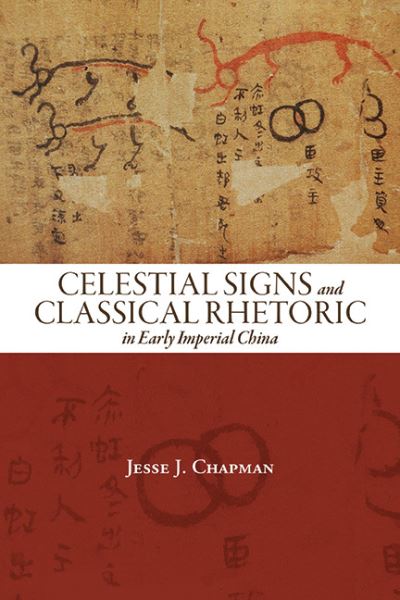
Celestial Signs and Classical Rhetoric in Early Imperial China considers how the reading of celestial signs-including comets, strange clouds, halos, rainbows, and planets in retrograde motion-fit into broader understandings of the human and cosmic worlds in Han times. Advancing a cultural studies approach to celestial signs, Jesse J.
Chapman traces the theory and practice of sign-reading across a range of genres, including technical manuals, historical narratives, and memorials to the throne. Moving from variegated materials in an early tomb to historical treatises compiled over several centuries, Chapman demonstrates that rhetoric and ideals drawn from classical texts gradually became fundamental sources of authority for interpreters of celestial signs.
Sign-reading in practice proved both flexible and context-dependent, and interpreters of celestial signs rarely, if ever, read omens in isolation. Celestial signs became meaningful in the context of historical understanding, personal experience, the state of the empire, and the life of the court. Reading omens meant reading the state of the world at a particular moment in time.
| ISBN: | 9798855800531 |
| Publication date: | 2nd December 2025 |
| Author: | Jesse J Chapman |
| Publisher: | SUNY Press an imprint of State University of New York Press |
| Format: | Paperback |
| Pagination: | 273 pages |
| Series: | SUNY Series in Chinese Philosophy and Culture |
| Genres: |
Asian history History of science Ancient history |
Considers how sign-reading fit into broader understandings of the human and cosmic worlds in Han times.Celestial Signs and Classical Rhetoric in Early Imperial China considers how the reading of celestial signs-including comets, strange clouds, halos, rainbows, and planets in retrograde motion-fit into broader understandings of the human and cosmic worlds in Han times. Advancing a cultural studies approach to celestial signs, Jesse J.
Celestial Signs and Classical Rhetoric in Early Imperial China features in the following genres: Asian history, History of science, Ancient history
Paperback, Hardback. Not Available.
Celestial Signs and Classical Rhetoric in Early Imperial China was written by Jesse J Chapman and published by SUNY Press an imprint of State University of New York Press
Celestial Signs and Classical Rhetoric in Early Imperial China has 273 pages
Yes it is part of SUNY Series in Chinese Philosophy and Culture series