

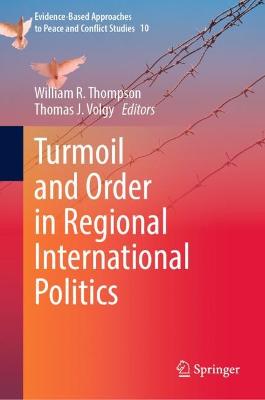
This edited book complements and follows up on the book, Thompson and Volgy et al, Regions, Power and Conflict: Constrained Capabilities, Hierarchy, and Rivalry. It is predicated in part on the paucity of published material available on comparing regional international politics. Monadic, dyadic, and systemic approaches all have their uses and have been exploited extensively.
The same cannot be said about comparative regional analysis. The premise is that a great deal of international politics takes place within regional parameters. Most states simply lack the capability or interest in devoting many resources to extra-regional affairs.
Yet each region is distinctive. In some, military coups remain common while they have died out as a form of political practice in others. A few have been highly conflictual and then become more pacific, while others persist in their conflict intensity.
Some have powerful neighbors with intervention tendencies, while others are surrounded by relatively weak states. Some are rich; others are poor. The point is that regions, all with proper names, have attributes that can be harnessed through comparison to explain why regional behavior differs greatly across the planet.
The aim is to replace the proper names with the leading variables that appear to drive behavior. For instance, to shrug and say “that’s the Middle East for you” does not take us very far. Replacing the Middle East label with conceptualization about how a set of small, weak, autocratic states behave subject to high penetration by major powers might take us farther than shrugging off regional identity.
We have good reasons to think that comparative regional analysis can deliver an explanatory value-added product just as much as alternative “levels of analysis” can. Ultimately, we might desire to integrate separate levels of analysis, rather than segregating them. But in the short term,we need to encourage comparative regional analysis because it is the least developed perspective.
Why that might be the case can be debated, but it stems in part from our disciplinary tendencies for some analysts to specialize in regional behavior largely in a descriptive vein while others prefer to focus on explaining universal behavior. Comparative regional behavior tends to be squeezed out by regional scholars who suspect generalization about behavior and universal scholars who suspect particular contexts such as regions.
Comparative regional analysis requires analysts who are willing to explore generalization but acknowledge regional contexts more explicitly than is customary. At the same time, more general substitutes for those regional labels must be introduced if explanatory headway is to be achieved.
| ISBN: | 9789819905560 |
| Publication date: | 11th April 2023 |
| Author: | William R Thompson |
| Publisher: | Springer Verlag, Singapore |
| Format: | Hardback |
| Pagination: | 290 pages |
| Series: | Evidence-Based Approaches to Peace and Conflict Studies |
| Genres: |
International relations Political science and theory Peace studies and conflict resolution |
This edited book complements and follows up on the book, Thompson and Volgy et al, Regions, Power and Conflict: Constrained Capabilities, Hierarchy, and Rivalry. It is predicated in part on the paucity of published material available on comparing regional international politics. Monadic, dyadic, and systemic approaches all have their uses and have been exploited extensively.
Turmoil and Order in Regional International Politics features in the following genres: International relations, Political science and theory, Peace studies and conflict resolution
Hardback. £107.99, down from the £119.99 cover price. Not Available.
Turmoil and Order in Regional International Politics was written by William R Thompson and published by Springer Verlag, Singapore
Turmoil and Order in Regional International Politics has 290 pages
Yes it is part of Evidence-Based Approaches to Peace and Conflict Studies series
£107.99, reduced from £119.99. Not Available.