

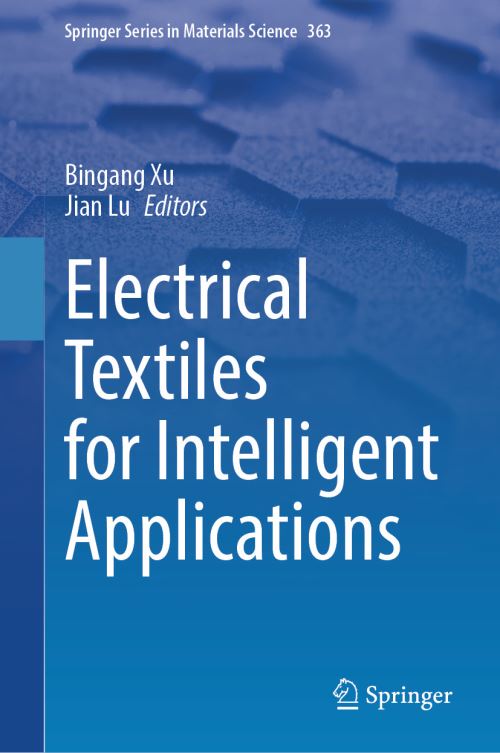
This book highlights a timely and comprehensive summary of latest advances in research and development in electrical textiles, focusing on material and structure design, methodologies, as well as intelligent applications such as energy harvesting, energy storage, electrochromic, electrodeformation, sensing. The integration of diverse functionalities is underscored to highlight a prevailing trend in electrical textiles. Current challenges are presented to illuminate potential directions. This book is instrumental for students, scholars, and researchers to develop a thorough understanding for this field, and will inspire their future research as well.
The journey of textiles reflects the progress of human society, from our ancestors' basic use of leaves to the intricate weaving of materials like silk and cotton, which offered greater warmth and comfort. The introduction of synthetic fibers such as nylon and Kevlar marked a major advancement in textile technology, significantly enhancing our lives over the last century.
Recently, technological advancements have drastically reduced the size of electronics, making them more portable. In 2021, there were 12.2 billion portable devices globally, a number expected to exceed 25 billion by 2025. The swift progress in electronics and the internet has created new demands for textiles, requiring them to offer more than just warmth.
For example, integrating self-powering features into textiles could transform electronics by allowing clothing to convert mechanical and solar energy into electricity. This could make powering portable devices like phones more efficient and convenient. Additionally, embedding electronics in textiles could improve energy use in applications like displays and sensors.
As electricity plays a vital role in modern life, developing electrical textiles is essential and full of practical potential. This emerging field has attracted considerable interest, leading to significant advancements recently. Electrical textiles can be divided into several important categories.
| ISBN: | 9789819220953 |
| Publication date: | 4th February 2027 |
| Author: | Bingang Xu, Jian Lu |
| Publisher: | Springer an imprint of Springer Nature Singapore |
| Format: | Hardback |
| Pagination: | 418 pages |
| Series: | Springer Series in Materials Science |
| Genres: |
Materials science Engineering applications of electronic, magnetic, optical materials Condensed matter physics (liquid state and solid state physics) Energy, power generation, distribution and storage Artificial intelligence |
This book highlights a timely and comprehensive summary of latest advances in research and development in electrical textiles, focusing on material and structure design, methodologies, as well as intelligent applications such as energy harvesting, energy storage, electrochromic, electrodeformation, sensing. The integration of diverse functionalities is underscored to highlight a prevailing trend in electrical textiles.
Electrical Textiles for Intelligent Applications features in the following genres: Materials science, Engineering applications of electronic, magnetic, optical materials, Condensed matter physics (liquid state and solid state physics), Energy, power generation, distribution and storage, Artificial intelligence
Hardback. £161.99, down from the £179.99 cover price. Not Available.
Electrical Textiles for Intelligent Applications was written by Bingang Xu, Jian Lu and published by Springer an imprint of Springer Nature Singapore
Electrical Textiles for Intelligent Applications has 418 pages
Yes it is part of Springer Series in Materials Science series
£161.99, reduced from £179.99. Not Available.