

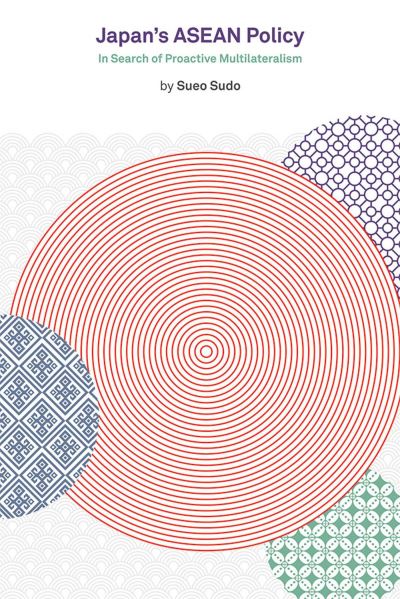
The central puzzle in the study of Japanese foreign policy has been why Japan has continued to play a passive role in international affairs, despite its impressive economic and political power. Challenging this central puzzle, the core argument of this study is to present an alternative path for the study of Japanese foreign policy. In fact, in recent years Japanese foreign policy has become less dependent on the United States, more strategic towards Asia, and more energetic towards international and regional institutions.One of the main features is multilateralism in Japanese foreign policy, as shown by Japan's active participation in the regional institutions. In pursuing multilateralism, Japan cooperated closely with the only durable regional body in Southeast Asia, to wit, the Association of Southeast Asian Nations (ASEAN). Given the fact that East Asian regionalism has been driven by ASEAN, it is of utmost urgency to investigate the emerging partnership between Japan and ASEAN. The central thesis of this study is thus to put Japan's ASEAN policy into a proper perspective by asserting that Japan's new policy initiatives towards ASEAN are not reactive, nor are they exceptions in a broader framework of merely reactive foreign policy.
| ISBN: | 9789814519021 |
| Publication date: | 30th July 2015 |
| Author: | Sueo Sudo |
| Publisher: | ISEAS-Yusof Ishak Institute an imprint of ISEAS - Yusof Ishak Institute |
| Format: | Paperback |
| Pagination: | 283 pages |
| Genres: |
International relations |
The central puzzle in the study of Japanese foreign policy has been why Japan has continued to play a passive role in international affairs, despite its impressive economic and political power. Challenging this central puzzle, the core argument of this study is to present an alternative path for the study of Japanese foreign policy. In fact, in recent years Japanese foreign policy has become less dependent on the United States, more strategic towards Asia, and more energetic towards international and regional institutions.One of the main features is multilateralism in Japanese foreign policy, as shown by Japan's active participation in the regional institutions. In pursuing multilateralism, Japan cooperated closely with the only durable regional body in Southeast Asia, to wit, the Association of Southeast Asian Nations (ASEAN). Given the fact that East Asian regionalism has been driven by ASEAN, it is of utmost urgency to investigate the emerging partnership between Japan and ASEAN. The central thesis of this study is thus to put Japan's ASEAN policy into a proper perspective by asserting that Japan's new policy initiatives towards ASEAN are not reactive, nor are they exceptions in a broader framework of merely reactive foreign policy.
Japan's ASEAN Policy features in the following genres: International relations
Japan's ASEAN Policy is available in Paperback
Japan's ASEAN Policy was written by Sueo Sudo and published by ISEAS-Yusof Ishak Institute an imprint of ISEAS - Yusof Ishak Institute
Japan's ASEAN Policy has 283 pages