

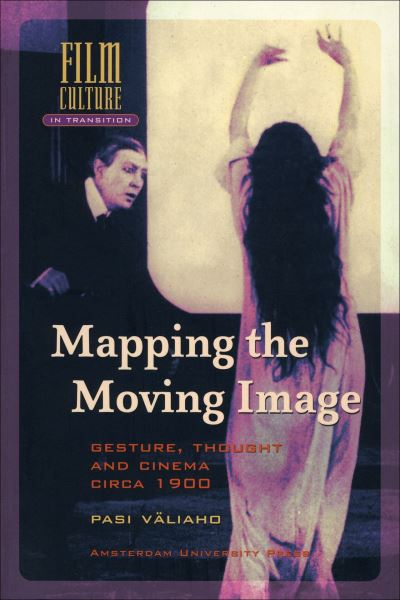
In Mapping the Moving Image, Pasi Väliaho offers a compelling study of how the medium of film came to shape our experience and thinking of the world and ourselves. By locating the moving image in new ways of seeing and saying as manifest in the arts, science and philosophy at the turn of the twentieth century, the book redefines the cinema as one of the most important anthropological processes of modernity. Moving beyond the typical understanding of cinema based on optical and linguistic models, Mapping the Moving Image takes the notion of rhythm as its cue in conceptualizing the medium's morphogenetic potentialities to generate affectivity, behaviour, and logics of sense. It provides a clear picture of how the forms of early film, while mobilizing bodily gestures and demanding intimate, affective engagement from the viewer, emerged in relation to bio-political investments in the body. The book also charts from a fresh perspective how the new gestural dynamics and visuality of the moving image fed into our thinking of time, memory and the unconscious.
| ISBN: | 9789089641410 |
| Publication date: | 9th February 2010 |
| Author: | Pasi Väliaho |
| Publisher: | Routledge an imprint of Taylor & Francis |
| Format: | Hardback |
| Pagination: | 296 pages |
| Series: | Film Culture in Transition |
| Genres: |
Film history, theory or criticism |
In Mapping the Moving Image, Pasi Väliaho offers a compelling study of how the medium of film came to shape our experience and thinking of the world and ourselves. By locating the moving image in new ways of seeing and saying as manifest in the arts, science and philosophy at the turn of the twentieth century, the book redefines the cinema as one of the most important anthropological processes of modernity.
Mapping the Moving Image features in the following genres: Film history, theory or criticism
Hardback. Not Available.
Mapping the Moving Image was written by Pasi Väliaho and published by Routledge an imprint of Taylor & Francis
Mapping the Moving Image has 296 pages
Yes it is part of Film Culture in Transition series