

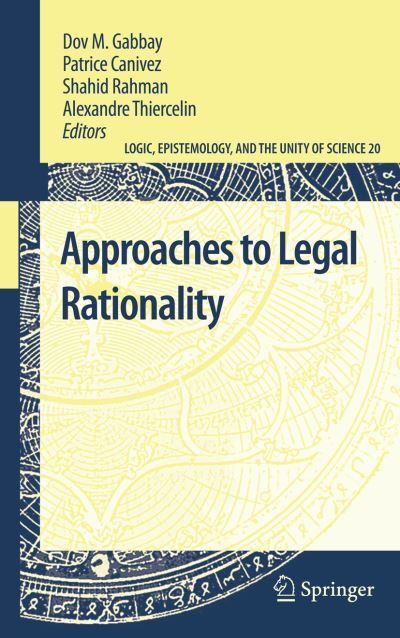
Legal theory, political sciences, sociology, philosophy, logic, artificial intelligence: there are many approaches to legal argumentation. Each of them provides specific insights into highly complex phenomena. Different disciplines, but also different traditions in disciplines (e.g. analytical and continental traditions in philosophy) find here a rare occasion to meet.
The present book contains contributions, both historical and thematic, from leading researchers in several of the most important approaches to legal rationality. One of the main issues is the relation between logic and law: the way logic is actually used in law, but also the way logic can make law explicit. An outstanding group of philosophers, logicians and jurists try to meet this issue.
The book is more than a collection of papers. However different their respective conceptual tools may be, the authors share a common conception: legal argumentation is a specific argumentation context.
| ISBN: | 9789048195879 |
| Publication date: | 9th October 2010 |
| Author: | Dov M Gabbay |
| Publisher: | Springer an imprint of Springer Netherlands |
| Format: | Hardback |
| Pagination: | 422 pages |
| Series: | Logic, Epistemology and the Unity of Science |
| Genres: |
Methods, theory and philosophy of law Philosophy: logic Artificial intelligence Philosophical traditions and schools of thought Political science and theory |
Legal theory, political sciences, sociology, philosophy, logic, artificial intelligence: there are many approaches to legal argumentation. Each of them provides specific insights into highly complex phenomena.
Approaches to Legal Rationality features in the following genres: Methods, theory and philosophy of law, Philosophy: logic, Artificial intelligence, Philosophical traditions and schools of thought, Political science and theory
Hardback. Not Available.
Approaches to Legal Rationality was written by Dov M Gabbay and published by Springer an imprint of Springer Netherlands
Approaches to Legal Rationality has 422 pages
Yes it is part of Logic, Epistemology and the Unity of Science series