

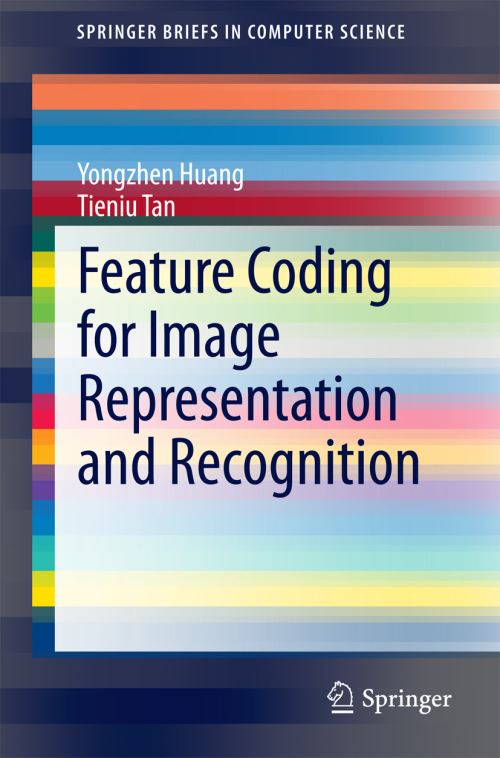
This brief presents a comprehensive introduction to feature coding, which serves as a key module for the typical object recognition pipeline. The text offers a rich blend of theory and practice while reflects the recent developments on feature coding, covering the following five aspects:
| ISBN: | 9783662449998 |
| Publication date: | 22nd January 2015 |
| Author: | Yongzhen Huang, Tieniu Tan |
| Publisher: | Springer an imprint of Springer Berlin Heidelberg |
| Format: | Paperback |
| Pagination: | 74 pages |
| Series: | Springer Briefs in Computer Science |
| Genres: |
Pattern recognition Computer vision Algorithms and data structures Artificial intelligence |
This brief presents a comprehensive introduction to feature coding, which serves as a key module for the typical object recognition pipeline. The text offers a rich blend of theory and practice while reflects the recent developments on feature coding, covering the following five aspects: (1) Review the state-of-the-art, analyzing the motivations and mathematical representations of various feature coding methods; (2) Explore how various feature coding algorithms evolve along years; (3) Summarize the main characteristics of typical feature coding algorithms and categorize them accordingly; (4) Discuss the applications of feature coding in different visual tasks, analyze the influence of some key factors in feature coding with intensive experimental studies; (5) Provide the suggestions of how to apply different feature coding methods and forecast the potential directions for future work on the topic.
Feature Coding for Image Representation and Recognition features in the following genres: Pattern recognition, Computer vision, Algorithms and data structures, Artificial intelligence
Paperback. Not Available.
Feature Coding for Image Representation and Recognition was written by Yongzhen Huang, Tieniu Tan and published by Springer an imprint of Springer Berlin Heidelberg
Feature Coding for Image Representation and Recognition has 74 pages
Yes it is part of Springer Briefs in Computer Science series