

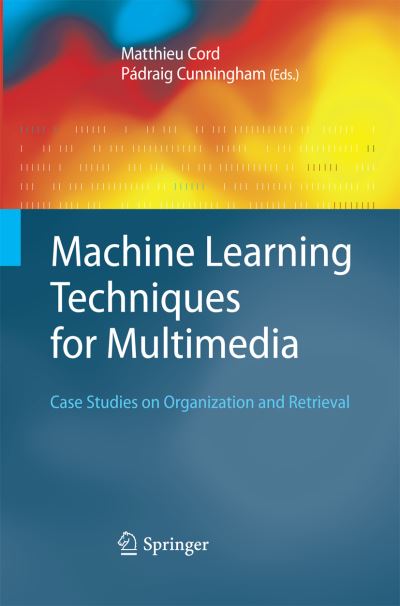
Processing multimedia content has emerged as a key area for the application of machine learning techniques, where the objectives are to provide insight into the domain from which the data is drawn, and to organize that data and improve the performance of the processes manipulating it. Applying machine learning techniques to multimedia content involves special considerations - the data is typically of very high dimension, and the normal distinction between supervised and unsupervised techniques does not always apply.
This book provides a comprehensive coverage of the most important machine learning techniques used and their application in this domain. Arising from the EU MUSCLE network, a program that drew together multidisciplinary teams with expertise in machine learning, pattern recognition, artificial intelligence, and image, video, text and crossmedia processing, the book first introduces the machine learning principles and techniques that are applied in multimedia data processing and analysis. The second part focuses on multimedia data processing applications, with chapters examining specific machine learning issues in domains such as image retrieval, biometrics, semantic labelling, mobile devices, and mining in text and music.
This book will be suitable for practitioners, researchers and students engaged with machine learning in multimedia applications.
| ISBN: | 9783642443626 |
| Publication date: | 23rd September 2014 |
| Author: | Matthieu Cord, Pádraig Cunningham |
| Publisher: | Springer an imprint of Springer Berlin Heidelberg |
| Format: | Paperback |
| Pagination: | 289 pages |
| Series: | Cognitive Technologies |
| Genres: |
Artificial intelligence Expert systems / knowledge-based systems Natural language and machine translation Image processing Human–computer interaction Data warehousing Data mining Information retrieval |
Processing multimedia content has emerged as a key area for the application of machine learning techniques, where the objectives are to provide insight into the domain from which the data is drawn, and to organize that data and improve the performance of the processes manipulating it. Applying machine learning techniques to multimedia content involves special considerations - the data is typically of very high dimension, and the normal distinction between supervised and unsupervised techniques does not always apply.
Machine Learning Techniques for Multimedia features in the following genres: Artificial intelligence, Expert systems / knowledge-based systems, Natural language and machine translation, Image processing, Human–computer interaction, Data warehousing, Data mining, Information retrieval
Paperback, Hardback. Not Available.
Machine Learning Techniques for Multimedia was written by Matthieu Cord, Pádraig Cunningham and published by Springer an imprint of Springer Berlin Heidelberg
Machine Learning Techniques for Multimedia has 289 pages
Yes it is part of Cognitive Technologies series