

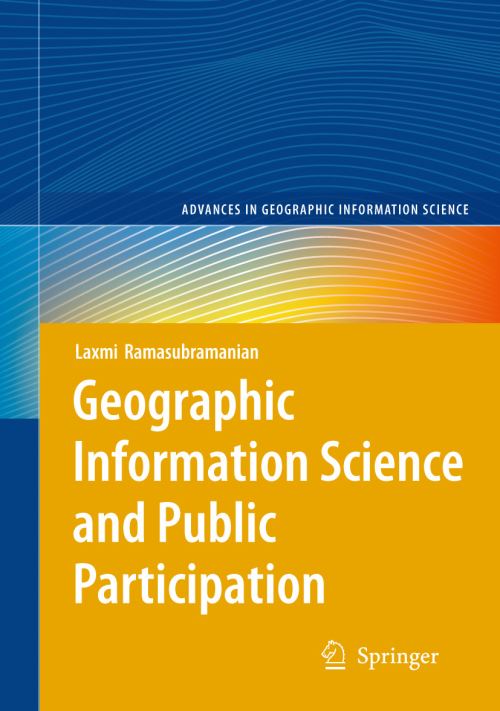
Computer-mediated participation is at the crossroads. In the early heady days of the digital revolution, access to "high" technologies such as GIS promised the empowerment of marginalized communities by providing data and information that was previously hidden away from public view. To a great extent, this goal has been achieved at least in the U.S. and Western Europe - data about a range of government initiatives and raw data about different aspects of spatial planning such as land use, community facilities, property ownership are available a mouse-click away. Now, that we, the public, have access to information, are we able to make better plans for the future of our cities and regions? Are we more inclusive in our planning efforts? Are we able to foster collaborative governance structures mediated by digital technologies? In the book, these issues will be discussed using a three-part structure. The first part of the book will be theoretical - it will review the literature in the field, establish a framework to organize the literature and to link three different subject areas (participation and community development, GIS and other related technologies, and planning processes). The second part of the book will be a series of success stories, case studies that review actual situations where participatory planning using GIS has enabled community wellbeing and empowerment. These case studies will vary in scale and focus on different planning issues (planning broadly defined). The final part of the book will step back to review alternative scenarios for the future, exploring where we are headed, as the technologies we are using to plan rapidly change.
| ISBN: | 9783642262142 |
| Publication date: | 1st March 2012 |
| Author: | Laxmi Ramasubramanian |
| Publisher: | Springer an imprint of Springer Berlin Heidelberg |
| Format: | Paperback |
| Pagination: | 163 pages |
| Series: | Advances in Geographic Information Science |
| Genres: |
Geographical information systems, geodata and remote sensing City and town planning: architectural aspects Urban communities Geophysics Sociology Human geography Earth sciences |
Computer-mediated participation is at the crossroads. In the early heady days of the digital revolution, access to "high" technologies such as GIS promised the empowerment of marginalized communities by providing data and information that was previously hidden away from public view.
Geographic Information Science and Public Participation features in the following genres: Geographical information systems, geodata and remote sensing, City and town planning: architectural aspects, Urban communities, Geophysics, Sociology, Human geography, Earth sciences
Paperback, Hardback. Not Available.
Geographic Information Science and Public Participation was written by Laxmi Ramasubramanian and published by Springer an imprint of Springer Berlin Heidelberg
Geographic Information Science and Public Participation has 163 pages
Yes it is part of Advances in Geographic Information Science series