

| ISBN: | 9783319991146 |
| Publication date: | 5th September 2018 |
| Author: | Brian Kokensparger |
| Publisher: | Springer an imprint of Springer International Publishing |
| Format: | Paperback |
| Pagination: | 93 pages |
| Series: | SpringerBriefs in Computer Science |
| Genres: |
Computer programming / software engineering Information visualization Programming and scripting languages: general Computer applications in the arts and humanities Computer applications in the social and behavioural sciences |
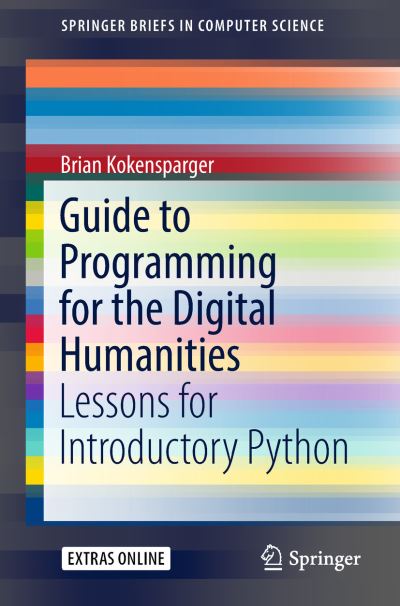
As an introduction to programming for the Digital Humanities (DH), this book presents six key assignments oriented on DH topics.
Guide to Programming for the Digital Humanities features in the following genres: Computer programming / software engineering, Information visualization, Programming and scripting languages: general, Computer applications in the arts and humanities, Computer applications in the social and behavioural sciences
Paperback. £53.99, down from the £59.99 cover price. Not Available.
Guide to Programming for the Digital Humanities was written by Brian Kokensparger and published by Springer an imprint of Springer International Publishing
Guide to Programming for the Digital Humanities has 93 pages
Yes it is part of SpringerBriefs in Computer Science series
£53.99, reduced from £59.99. Not Available.