

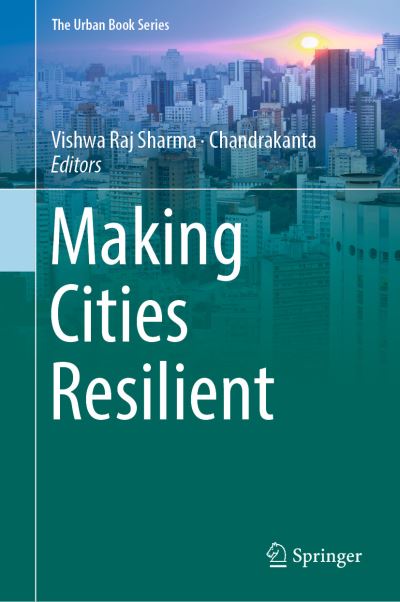
As the world has transformed, so have cities. Today, cities are home to 54 percent of the world's population, and by the middle of this century that figure will likely rise to 66 percent. According to the United Nations (UN) Habitat I (1972), Habitat II (1996) and Habitat III (2016) summits, cities are facing many serious challenges, including growing inequality, security concerns and the worsening impacts of climate change. Uncontrolled urbanization has led to many problems (haphazard growth of areas, emergence of slums, inadequate water and power supply, poor sanitation, shortage of transport and other civic amenities, shrinking green spaces, pollution, crime, and urban disaster risks such as fire, flood, road and industrial accidents, etc.).
| ISBN: | 9783319949314 |
| Publication date: | 27th February 2019 |
| Author: | Vishwa Raj Sharma, Chandrakanta |
| Publisher: | Springer an imprint of Springer International Publishing |
| Format: | Hardback |
| Pagination: | 345 pages |
| Series: | The Urban Book Series |
| Genres: |
Sociology Regional / urban economics Migration, immigration and emigration Urban communities Population and migration geography Sustainability Meteorology and climatology Human geography |
As the world has transformed, so have cities. Today, cities are home to 54 percent of the world's population, and by the middle of this century that figure will likely rise to 66 percent.
Making Cities Resilient features in the following genres: Sociology, Regional / urban economics, Migration, immigration and emigration, Urban communities, Population and migration geography, Sustainability, Meteorology and climatology, Human geography
Hardback. Not Available.
Making Cities Resilient was written by Vishwa Raj Sharma, Chandrakanta and published by Springer an imprint of Springer International Publishing
Making Cities Resilient has 345 pages
Yes it is part of The Urban Book Series series