

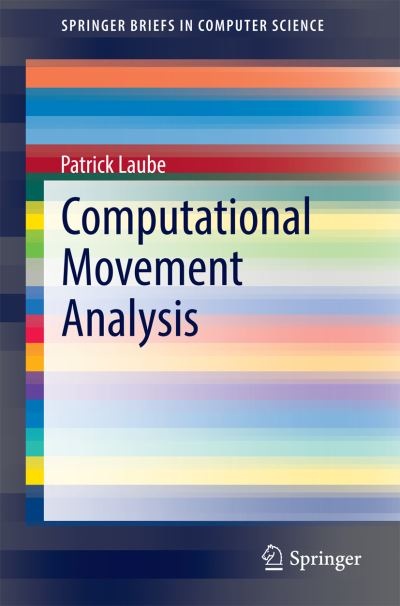
This SpringerBrief discusses the characteristics of spatiotemporal movement data, including uncertainty and scale. It investigates three core aspects of Computational Movement Analysis: Conceptual modeling of movement and movement spaces, spatiotemporal analysis methods aiming at a better understanding of movement processes (with a focus on data mining for movement patterns), and using decentralized spatial computing methods in movement analysis.
The author presents Computational Movement Analysis as an interdisciplinary umbrella for analyzing movement processes with methods from a range of fields including GIScience, spatiotemporal databases and data mining. Key challenges in Computational Movement Analysis include bridging the semantic gap, privacy issues when movement data involves people, incorporating big and open data, and opportunities for decentralized movement analysis arising from the internet of things.
The interdisciplinary concepts of Computational Movement Analysis make this an important book for professionals and students in computer science, geographic information science and its application areas, especially movement ecology and transportation research.
| ISBN: | 9783319102672 |
| Publication date: | 12th September 2014 |
| Author: | Patrick Laube |
| Publisher: | Springer an imprint of Springer International Publishing |
| Format: | Paperback |
| Pagination: | 87 pages |
| Series: | Springer Briefs in Computer Science |
| Genres: |
Data mining Expert systems / knowledge-based systems Regional / International studies Political economy Geographical information systems, geodata and remote sensing Highway and traffic engineering |
This SpringerBrief discusses the characteristics of spatiotemporal movement data, including uncertainty and scale. It investigates three core aspects of Computational Movement Analysis: Conceptual modeling of movement and movement spaces, spatiotemporal analysis methods aiming at a better understanding of movement processes (with a focus on data mining for movement patterns), and using decentralized spatial computing methods in movement analysis.
Computational Movement Analysis features in the following genres: Data mining, Expert systems / knowledge-based systems, Regional / International studies, Political economy, Geographical information systems, geodata and remote sensing, Highway and traffic engineering
Paperback. Not Available.
Computational Movement Analysis was written by Patrick Laube and published by Springer an imprint of Springer International Publishing
Computational Movement Analysis has 87 pages
Yes it is part of Springer Briefs in Computer Science series