

Designing a good unemployment insurance scheme is a delicate matter. In a system with no or little insurance, households may be subject to a high income risk, whereas excessively generous unemployment insurance systems are known to lead to high unemployment rates and are costly both from a fiscal perspective and for society as a whole.
Andreas Pollak investigates what an optimal unemployment insurance system would look like, i.e. a system that constitutes the best possible compromise between income security and incentives to work.
Using theoretical economic models and complex numerical simulations, he studies the effects of benefit levels and payment durations on unemployment and welfare. As the models allow for considerable heterogeneity of households, including a history-dependent labor productivity, it is possible to analyze how certain policies affect individuals in a specific age, wealth or skill group. The most important aspect of an unemployment insurance system turns out to be the benefits paid to the long-term unemployed.
If this parameter is chosen too high, a large number of households may get caught in a long spell of unemployment with little chance of finding work again. Based on the predictions in these models, the so-called Hartz IV labor market reform recently adopted in Germany should have highly favorable effects on the unemployment rates and welfare in the long run.
| ISBN: | 9783161493041 |
| Publication date: | 8th May 2007 |
| Author: | Andreas Pollak |
| Publisher: | Mohr Siebeck |
| Format: | Hardback |
| Pagination: | 178 pages |
| Series: | Beitrage Zur Finanzwissenschaft |
| Genres: |
Economic theory and philosophy Finance and the finance industry |
Designing a good unemployment insurance scheme is a delicate matter. In a system with no or little insurance, households may be subject to a high income risk, whereas excessively generous unemployment insurance systems are known to lead to high unemployment rates and are costly both from a fiscal perspective and for society as a whole.
Optimal Unemployment Insurance features in the following genres: Economic theory and philosophy, Finance and the finance industry
Hardback. Not Available.
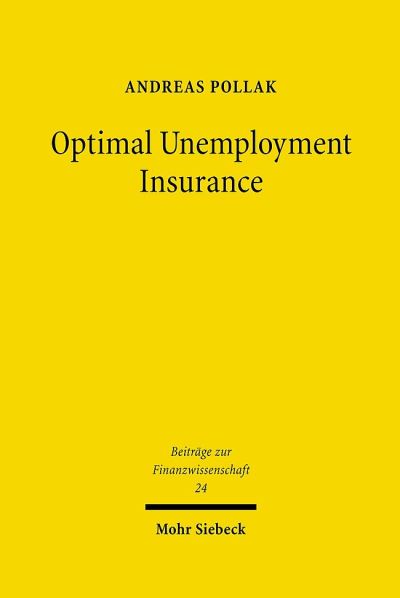
Optimal Unemployment Insurance was written by Andreas Pollak and published by Mohr Siebeck
Optimal Unemployment Insurance has 178 pages
Yes it is part of Beitrage Zur Finanzwissenschaft series