

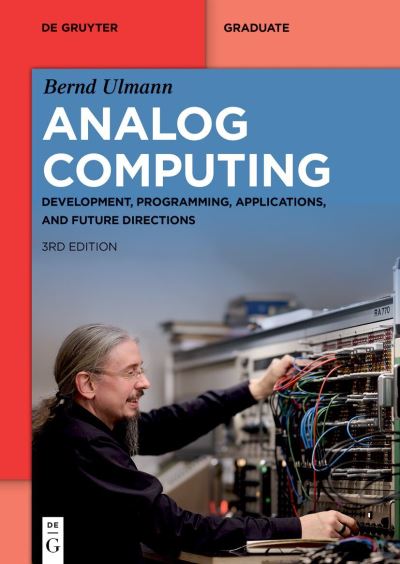
Analog and hybrid computing are two central pillars in the field of unconventional computing. Almost forgotten for decades, interest in these technologies is rapidly rising as they offer a viable path to high-speed and highly energy-efficient computing for the 21st century for a variety of applications ranging from high performance computing, edge computing, medical applications, etc., to artificial intelligence.
Their high speed and high energy efficiency are of utmost importance in a time where vast amounts of electric energy are consumed by classic digital computers especially in the ever growing field of artificial intelligence and large language models.
The book "Analog Computing" has established itself over the past decade as the standard textbook on the subject as refl ected in this third edition, which has been substantially extended over the previous editions. The bibliography alone has been expanded to well over 1000 entries making it a resource in itself for research and learning.
The book covers the history of analog computers from the Antikythera mechanism to recent developments of reconfi gurable systems. It also includes a wide variety of worked examples showing basic programming techniques for analog computers. In addition to this, reconfigurable analog and hybrid computers as well as digital differential analyzers are also discussed in detail.
A large portion is devoted to the discussion of classic and current analog and hybrid computer applications. The last chapter gives an outlook into the highly promising future of these fascinating machines.
| ISBN: | 9783119146289 |
| Publication date: | 2nd February 2026 |
| Author: | Bernd Ulmann |
| Publisher: | De Gruyter |
| Format: | Paperback |
| Pagination: | 620 pages |
| Series: | De Gruyter Textbook |
| Genres: |
Computer architecture and logic design Electronics engineering History of Computing, digital and information technologies Computer programming / software engineering |
Analog and hybrid computing are two central pillars in the field of unconventional computing. Almost forgotten for decades, interest in these technologies is rapidly rising as they offer a viable path to high-speed and highly energy-efficient computing for the 21st century for a variety of applications ranging from high performance computing, edge computing, medical applications, etc., to artificial intelligence.Their high speed and high energy efficiency are of utmost importance in a time where vast amounts of electric energy are consumed by classic digital computers especially in the ever growing field of artificial intelligence and large language models.The book "Analog Computing" has established itself over the past decade as the standard textbook on the subject as refl ected in this third edition, which has been substantially extended over the previous editions.
Analog Computing features in the following genres: Computer architecture and logic design, Electronics engineering, History of Computing, digital and information technologies, Computer programming / software engineering
Paperback. £73.80, down from the £82.00 cover price. Not Available.
Analog Computing was written by Bernd Ulmann and published by De Gruyter
Analog Computing has 620 pages
Yes it is part of De Gruyter Textbook series
£73.80, reduced from £82.00. Not Available.