

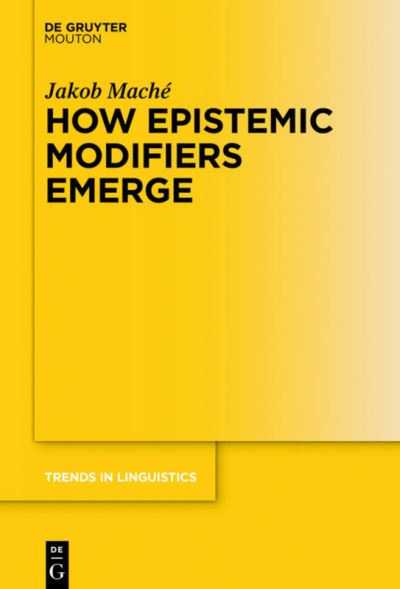
This book delivers the first comprehensive study on German modal verbs which summarises and critically reflects the discussion of the last 500 years, checks these findings against large corpus data and is accessible to the English reader. It is shown that non-epistemic modal verbs modify events, whereas their epistemic counterparts modify the proposition, and how the latter developed from the former.
| ISBN: | 9783110400564 |
| Publication date: | 4th March 2019 |
| Author: | Jakob Maché |
| Publisher: | De Gruyter Mouton an imprint of De Gruyter |
| Format: | Hardback |
| Pagination: | 611 pages |
| Series: | Trends in Linguistics. Studies and Monographs |
| Genres: |
Linguistics Historical and comparative linguistics |
This book delivers the first comprehensive study on German modal verbs which summarises and critically reflects the discussion of the last 500 years, checks these findings against large corpus data and is accessible to the English reader. It is shown that non-epistemic modal verbs modify events, whereas their epistemic counterparts modify the proposition, and how the latter developed from the former.
How Epistemic Modifiers Emerge features in the following genres: Linguistics, Historical and comparative linguistics
Hardback. Not Available.
How Epistemic Modifiers Emerge was written by Jakob Maché and published by De Gruyter Mouton an imprint of De Gruyter
How Epistemic Modifiers Emerge has 611 pages
Yes it is part of Trends in Linguistics. Studies and Monographs series