

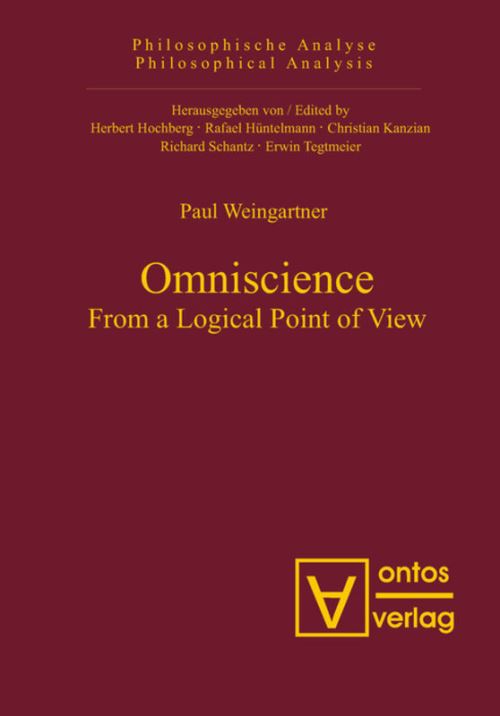
The aim of the book is to clarify the concept of omniscience. This is done first by discussing basic questions on omniscience (chs.1-12) and secondly by offering a theory of omniscience as an axiomatic system in which also a definition of omniscience is given (ch.13). The twelve chapters deal with questions like whether everything is true what God knows, whether Godns knowledge is bound to time, whether it concerns singular truths or only laws, whether it extends also to contingent future events.etc. The book is neither a book about the existence of God nor about proofs for his existence. It is a book about the possibility of a consistent concept of omniscience which can be attributed to God. And it invalidates opposite claims and shows that they are based on wrong or very doubtful premises. The pros and cons at the beginning of each chapter represent different positions and objections which are clarified and discussed in the answer to the objections.
| ISBN: | 9783110326697 |
| Publication date: | 15th January 2008 |
| Author: | Paul Weingartner |
| Publisher: | De Gruyter |
| Format: | Hardback |
| Pagination: | 188 pages |
| Series: | Philosophische Analyse / Philosophical Analysis |
| Genres: |
Philosophy: metaphysics and ontology Philosophy of religion Theology Christianity |
The aim of the book is to clarify the concept of omniscience. This is done first by discussing basic questions on omniscience (chs.1-12) and secondly by offering a theory of omniscience as an axiomatic system in which also a definition of omniscience is given (ch.13).
Omniscience features in the following genres: Philosophy: metaphysics and ontology, Philosophy of religion, Theology, Christianity
Ebook, Hardback. £108.45, down from the £120.50 cover price. Not Available.
Omniscience was written by Paul Weingartner and published by De Gruyter
Omniscience has 188 pages
Yes it is part of Philosophische Analyse / Philosophical Analysis series
£108.45, reduced from £120.50. Not Available.