

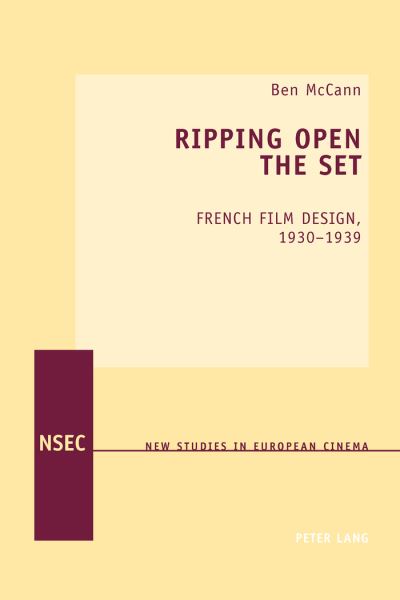
French film design throughout the 1930s was not just descriptive, but also expressive: sets were not merely part of the background, but were vital components of a film's overall atmosphere, impact and critical afterlife. This was a period when sets were 'ripped open', as painted backdrops were replaced by three-dimensional constructions to ensure greater proximity to reality.
Accomplished set designers such as Alexandre Trauner, Jacques Krauss and Eugène Lourié crafted a series of designs both realist and expressionistic that brought out the underlying themes of a film's narrative and helped create an exportable vision of 'Frenchness' that influenced other European and American film design practices.
This book details the elaborate paraphrasing tendencies of French film design in the 1930s.
The author explores the crucial role of the set designer in the film's evolutionary process and charts how the rapid development of studio practices enabled designers to become progressively more ambitious. The book examines key films such as Quatorze juillet (1932), Un Carnet de bal (1937), La Grande illusion (1937) and Le Jour se lève (1939) to demonstrate how set design works at establishing time and place, generating audience familiarity and recognition and underpinning each film's visual style.
| ISBN: | 9783039103119 |
| Publication date: | 7th May 2013 |
| Author: | Ben McCann |
| Publisher: | Peter Lang an imprint of Peter Lang AG, Internationaler Verlag der Wissenschaften |
| Format: | Paperback |
| Pagination: | 254 pages |
| Series: | New Studies in European Cinema |
| Genres: |
Films, cinema Social and cultural history Oral history Revolutions, uprisings, rebellions Literary studies: general European history |
French film design throughout the 1930s was not just descriptive, but also expressive: sets were not merely part of the background, but were vital components of a film's overall atmosphere, impact and critical afterlife. This was a period when sets were 'ripped open', as painted backdrops were replaced by three-dimensional constructions to ensure greater proximity to reality.
Ripping Open the Set features in the following genres: Films, cinema, Social and cultural history, Oral history, Revolutions, uprisings, rebellions, Literary studies: general, European history
Paperback. Not Available.
Ripping Open the Set was written by Ben McCann and published by Peter Lang an imprint of Peter Lang AG, Internationaler Verlag der Wissenschaften
Ripping Open the Set has 254 pages
Yes it is part of New Studies in European Cinema series