

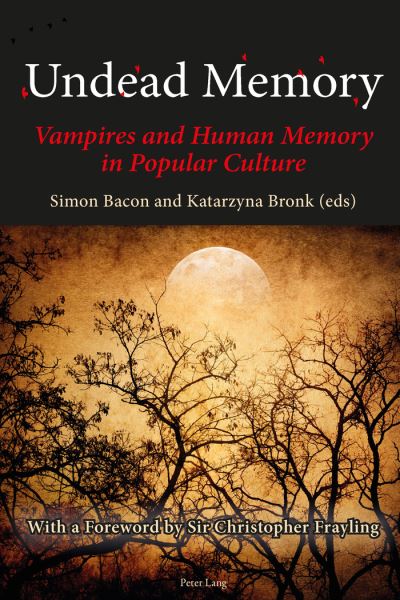
Vampires have never been as popular in Western culture as they are now: Twilight, True Blood, The Vampire Diaries and their fans have secured the vampire's place in contemporary culture. Yet the role vampires play in how we remember our pasts and configure our futures has yet to be explored. The present volume fills this gap, addressing the many ways in which vampire narratives have been used to describe the tensions between memory and identity in the twentieth and twenty-first centuries.
The first part of the volume considers the use of the vampire to deal with rapid cultural change, both to remember the past and to imagine possible futures.
The second part examines vampire narratives as external cultural archives, a memory library allowing us to reference the past and understand how this underpins our present. Finally, the collection explores how the undead comes to embody memorial practice itself: an autonomous entity that gives form to traumatic, feminist, postcolonial and oral traditions and reveals the resilience of minority memory.
Ranging from actual reports of vampire activity to literary and cinematic interpretations of the blood-drinking revenant, this timely study investigates the ways in which the &«undead memory» of the vampire throughout Western culture has helped us to remember more clearly who we were, who we are, and who we will/may become.
| ISBN: | 9783034309387 |
| Publication date: | 12th December 2013 |
| Author: | Simon Bacon |
| Publisher: | Peter Lang an imprint of Peter Lang AG, Internationaler Verlag der Wissenschaften |
| Format: | Hardback |
| Pagination: | 304 pages |
| Genres: |
Cultural studies Social and cultural anthropology Film: styles and genres Literary studies: c 1900 to c 2000 Literary studies: from c 2000 Regional / International studies The arts: general topics |
Vampires have never been as popular in Western culture as they are now: Twilight, True Blood, The Vampire Diaries and their fans have secured the vampire's place in contemporary culture. Yet the role vampires play in how we remember our pasts and configure our futures has yet to be explored.
Undead Memory features in the following genres: Cultural studies, Social and cultural anthropology, Film: styles and genres, Literary studies: c 1900 to c 2000, Literary studies: from c 2000, Regional / International studies, The arts: general topics
Hardback. Not Available.
Undead Memory was written by Simon Bacon and published by Peter Lang an imprint of Peter Lang AG, Internationaler Verlag der Wissenschaften
Undead Memory has 304 pages