

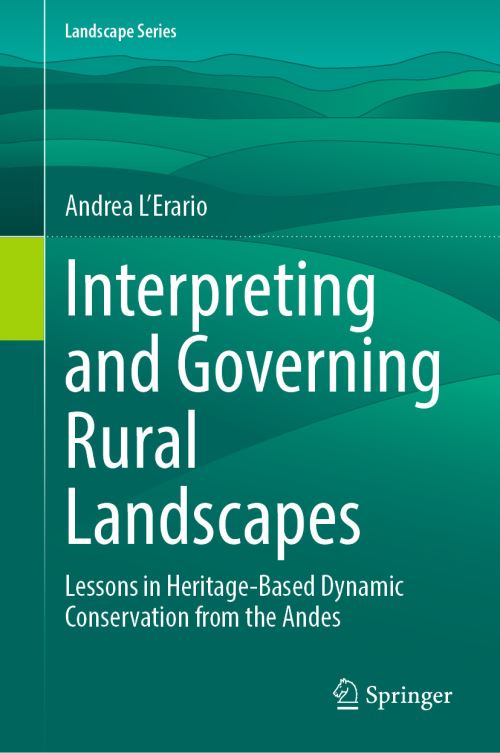
Historical rural landscape systems are increasingly threatened by climate change, socioeconomic transformation, and processes of marginalization and abandonment. These dynamics pose substantial challenges for global food security, landscape heritage conservation, and environmental stability, often leading to hydrogeological disruption and the degradation of long-established socio-ecological systems. While such processes have emerged more recently in many developing countries, their impacts are already evident and accelerating.
Despite these pressures, marginal rural areas continue to host the majority of the world's bio-cultural diversity, including landscapes, agrobiodiversity, traditional knowledge, and cultural practices sustained by family farming systems. Safeguarding this heritage has become a central concern within the global agroecological transition. This book argues that effective conservation and management of historical rural landscapes require a systemic interpretation of landscape dynamics combined with community-based governance approaches that actively involve local actors in decision-making processes.
Focusing on recent initiatives, particularly in Latin America and Andean countries, the book examines policies and projects that recognize rural communities as custodians of landscape heritage. Through an analysis of systemic approaches and innovations in multilevel and multistakeholder governance, it identifies key factors that support effective conservation and explores their potential replicability across diverse rural contexts.
| ISBN: | 9783032309228 |
| Publication date: | 26th January 2027 |
| Author: | Andrea LErario |
| Publisher: | Springer an imprint of Springer Nature Switzerland |
| Format: | Hardback |
| Pagination: | 285 pages |
| Series: | Landscape Series |
| Genres: |
Ecological science, the Biosphere Cultural studies Applied ecology Agricultural science Museology and heritage studies Archaeology |
Historical rural landscape systems are increasingly threatened by climate change, socioeconomic transformation, and processes of marginalization and abandonment. These dynamics pose substantial challenges for global food security, landscape heritage conservation, and environmental stability, often leading to hydrogeological disruption and the degradation of long-established socio-ecological systems.
Interpreting and Governing Rural Landscapes features in the following genres: Ecological science, the Biosphere, Cultural studies, Applied ecology, Agricultural science, Museology and heritage studies, Archaeology
Hardback. £116.99, down from the £129.99 cover price. Not Available.
Interpreting and Governing Rural Landscapes was written by Andrea LErario and published by Springer an imprint of Springer Nature Switzerland
Interpreting and Governing Rural Landscapes has 285 pages
Yes it is part of Landscape Series series
£116.99, reduced from £129.99. Not Available.