

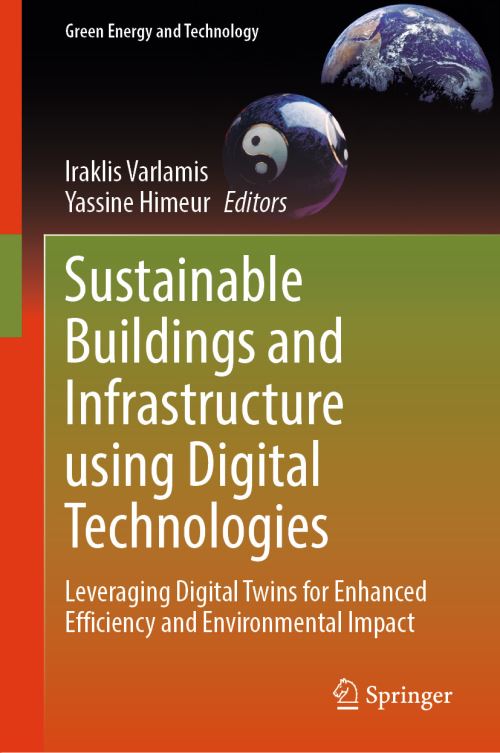
This book bridges the gap between digital innovation and sustainable development, offering a comprehensive guide to leveraging digital twin technology for smarter, greener buildings and infrastructure. By combining real-world case studies, cutting-edge research, and interdisciplinary insights, it demonstrates how virtual replicas of physical systems can optimize energy efficiency, reduce environmental footprints, and enhance urban resilience. From foundational concepts like Building Information Modelling (BIM) to advanced applications-such as blockchain-secured sustainability assessments and AI-driven occupancy monitoring-the book provides actionable strategies for designing, managing, and retrofitting eco-friendly structures.
Unique chapters on prefabricated modular construction, industrial resource efficiency, and policy frameworks reveal how digital twins empower stakeholders to balance economic growth with environmental stewardship. With a focus on social equity, economic benefits, and global sustainability goals, this book equips policymakers, urban planners, and industry leaders to navigate regulatory landscapes and adopt scalable solutions. Edited by leading experts in data science, AI, and smart energy systems, and a multidisciplinary group of authors, this work combines research and practical experience, from exploring risk management in infrastructure to the societal impacts of digital twins.
| ISBN: | 9783032304681 |
| Publication date: | 30th October 2026 |
| Author: | Iraklis Varlamis, Yassine Himeur |
| Publisher: | Springer an imprint of Springer Nature Switzerland |
| Format: | Hardback |
| Pagination: | 545 pages |
| Series: | Green Energy and Technology |
| Genres: |
Environmentally-friendly (‘green’) architecture and design Applied mathematics Sustainability Computer-aided design (CAD) Artificial intelligence The environment |
This book bridges the gap between digital innovation and sustainable development, offering a comprehensive guide to leveraging digital twin technology for smarter, greener buildings and infrastructure. By combining real-world case studies, cutting-edge research, and interdisciplinary insights, it demonstrates how virtual replicas of physical systems can optimize energy efficiency, reduce environmental footprints, and enhance urban resilience.
Sustainable Buildings and Infrastructure Using Digital Technologies features in the following genres: Environmentally-friendly (‘green’) architecture and design, Applied mathematics, Sustainability, Computer-aided design (CAD), Artificial intelligence, The environment
Hardback. £125.99, down from the £139.99 cover price. Not Available.
Sustainable Buildings and Infrastructure Using Digital Technologies was written by Iraklis Varlamis, Yassine Himeur and published by Springer an imprint of Springer Nature Switzerland
Sustainable Buildings and Infrastructure Using Digital Technologies has 545 pages
Yes it is part of Green Energy and Technology series
£125.99, reduced from £139.99. Not Available.