

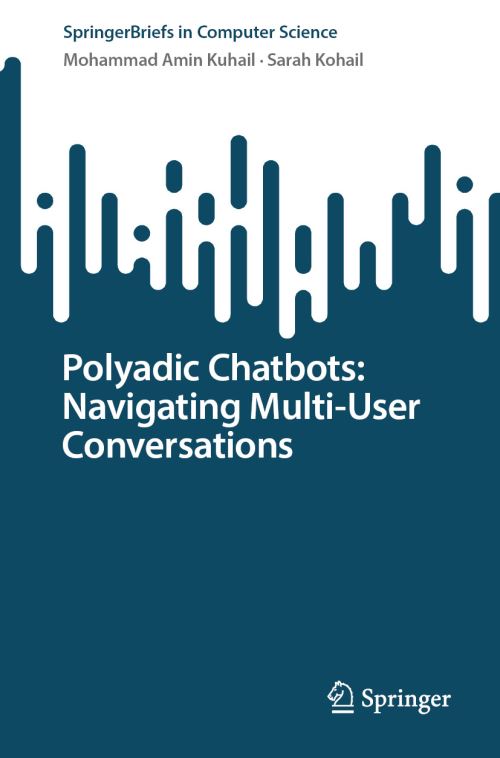
This book provides a comprehensive introduction to polyadic chatbots, systems designed to manage multi-user conversations. It begins with the core design principles of these chatbots, emphasizing how they differ from traditional one-on-one systems and outlining the methodologies for managing multiple participants simultaneously, including real-time adaptation and behavioral modeling. The book then moves into real-world case studies, demonstrating how polyadic chatbots are used in industries like education, healthcare, and customer service to enhance group collaboration, therapy sessions, and customer interactions.
The book discusses critical challenges, such as bias, fairness, and privacy, and offers solutions to ensure secure, unbiased, and equitable group interactions. It also explores the ethical responsibilities of chatbots, such as moderating sensitive discussions and preventing misinformation, while ensuring all users participate equally.
Finally, the book takes a forward-looking approach, highlighting future trends like emotionally intelligent chatbots and proactive AI-driven group management, providing insights into how polyadic chatbots will evolve and impact the future of group communication systems.
With its focus on both technical and ethical dimensions, this book is an essential guide for AI scientists, researchers, and developers interested in advancing the field of multi-user conversational systems.
| ISBN: | 9783032281029 |
| Publication date: | 28th October 2026 |
| Author: | Mohammad Amin Kuhail, Sarah Kohail |
| Publisher: | Springer an imprint of Springer Nature Switzerland |
| Format: | Paperback |
| Pagination: | 101 pages |
| Series: | SpringerBriefs in Computer Science |
| Genres: |
Human–computer interaction Natural language and machine translation |
This book provides a comprehensive introduction to polyadic chatbots, systems designed to manage multi-user conversations. It begins with the core design principles of these chatbots, emphasizing how they differ from traditional one-on-one systems and outlining the methodologies for managing multiple participants simultaneously, including real-time adaptation and behavioral modeling.
Polyadic Chatbots features in the following genres: Human–computer interaction, Natural language and machine translation
Paperback. £40.49, down from the £44.99 cover price. Not Available.
Polyadic Chatbots was written by Mohammad Amin Kuhail, Sarah Kohail and published by Springer an imprint of Springer Nature Switzerland
Polyadic Chatbots has 101 pages
Yes it is part of SpringerBriefs in Computer Science series
£40.49, reduced from £44.99. Not Available.