

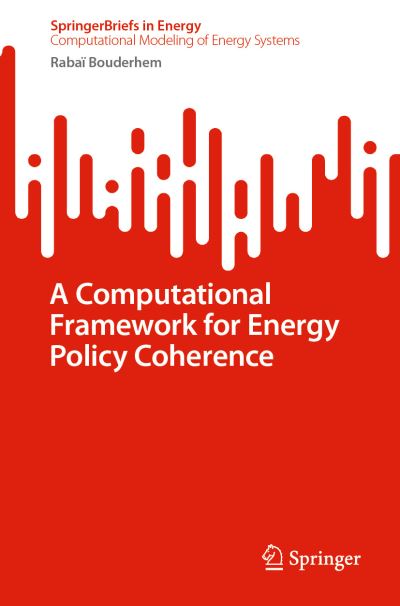
Computational methods can achieve high accuracy, process large document collections, and generate actionable policy insights. Nevertheless, energy policy remains inconsistent, and institutional fragmentation persists, excluding marginalized populations from reshaping governance. This issue stems from conceptual failures rather than technical ones, as biased algorithms reinforce existing power structures. This book examines why these challenges arise. The governance-data-inequality nexus shows how institutional fragmentation creates biased data infrastructures that train algorithms, perpetuating fragmentation. By combining complexity science with ethical frameworks like energy justice, the analysis reveals why conventional computational approaches serve only as diagnostic tools rather than genuine governance solutions. The BRIDGE-E framework redefines computational governance. Equity is not merely an afterthought but a guiding principle for algorithmic systems. Epistemic inclusion shapes what counts as data, and energy justice determines policy pathways. Deliberation is central, promoting internal institutional capacity instead of reliance on external solutions. BRIDGE-E effectively addresses the challenges of institutional fragmentation, data scarcity, and contested values in governance.
A Computational Framework for Energy Policy Coherence serves policymakers, energy planners, AI researchers, and development practitioners by explaining how computational innovation can address governance fragmentation while ensuring equity.
| ISBN: | 9783032229779 |
| Publication date: | 3rd August 2026 |
| Author: | Rabaï Bouderhem |
| Publisher: | Springer an imprint of Springer Nature Switzerland |
| Format: | Paperback |
| Pagination: | 118 pages |
| Series: | SpringerBriefs in Energy |
| Genres: |
Alternative and renewable energy sources and technology Central / national / federal government policies The environment |
Computational methods can achieve high accuracy, process large document collections, and generate actionable policy insights. Nevertheless, energy policy remains inconsistent, and institutional fragmentation persists, excluding marginalized populations from reshaping governance.
A Computational Framework for Energy Policy Coherence features in the following genres: Alternative and renewable energy sources and technology, Central / national / federal government policies, The environment
Paperback. £35.99, down from the £39.99 cover price. Not Available.
A Computational Framework for Energy Policy Coherence was written by Rabaï Bouderhem and published by Springer an imprint of Springer Nature Switzerland
A Computational Framework for Energy Policy Coherence has 118 pages
Yes it is part of SpringerBriefs in Energy series
£35.99, reduced from £39.99. Not Available.