

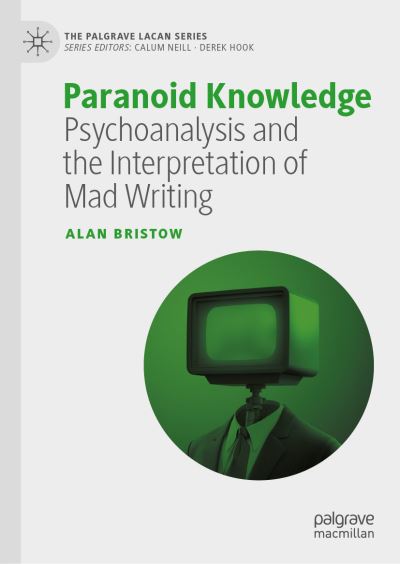
This book inserts Lacanian theory into contemporary debates within the emerging interdisciplinary field of 'Mad Studies' via an analysis of psychotic writing. The author questions what psychoanalysis can offer a progressive, emancipatory means for engaging madness. Taking the Memoirs of Daniel Paul Schreber and the Exegesis of Philip K. Dick as the primary sites of investigation, the book examines how the written representations of paranoid psychosis have historically been exploited to further clinical insights and forms of social critique.
Paranoid Knowledge reveals how Lacan's theorisations of the sinthome, the universal condition of psychosis and the overdetermined nature of any interpretation provide theoretical alliance to Mad Studies and critical mental health endeavours. By focusing on the taut interrelation between knowledge production, diagnostic structure and technological development, Bristow demonstrates how an individual's madness can harness, reformulate or channel broader socio-cultural themes.
As such, the author contends that psychosis can be shown to have value beyond mere pathology and may offer us a privileged position to grasp psychosocial processes. This book will offer fresh insights for students and scholars of psychoanalysis, critical psychiatry, literary theory, philosophy, and cultural studies.
| ISBN: | 9783031997341 |
| Publication date: | 8th May 2026 |
| Author: | Alan Bristow |
| Publisher: | Palgrave Macmillan an imprint of Springer Nature Switzerland |
| Format: | Hardback |
| Pagination: | 120 pages |
| Series: | The Palgrave Lacan Series |
| Genres: |
Psychoanalytical and Freudian psychology Cultural studies Psychological theory, systems, schools and viewpoints Literary theory Fiction |
This book inserts Lacanian theory into contemporary debates within the emerging interdisciplinary field of 'Mad Studies' via an analysis of psychotic writing. The author questions what psychoanalysis can offer a progressive, emancipatory means for engaging madness.
Paranoid Knowledge features in the following genres: Psychoanalytical and Freudian psychology, Cultural studies, Psychological theory, systems, schools and viewpoints, Literary theory, Fiction
Hardback. £31.49, down from the £34.99 cover price. Not Available.
Paranoid Knowledge was written by Alan Bristow and published by Palgrave Macmillan an imprint of Springer Nature Switzerland
Paranoid Knowledge has 120 pages
Yes it is part of The Palgrave Lacan Series series
£31.49, reduced from £34.99. Not Available.