

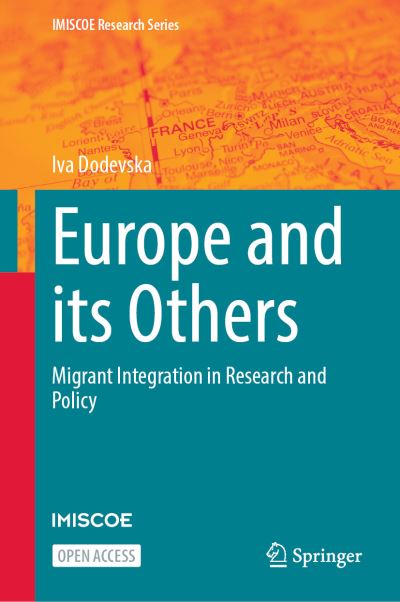
This open access book joins other critical works that draw attention to the ways integration is debated, legislated, conceptualized, monitored, evaluated, and ultimately, normalized as a mode of governance. Situated at the interstices of migration studies, European studies, and the social studies of science, the book examines the role of social scientific research, EU policy, and research-policy collaboration in shaping the 'migrant integration' paradigm in Europe. Amidst heated debates on immigration and 'migrant integration', the European Union becomes an increasingly relevant actor, where important resources are earmarked for the implementation of civic integration measures, as well as for producing 'evidence' to guide policy. Simultaneously, a prolific scholarship attempts to understand, measure and compare how and whether immigrants are 'integrated into society', often in the effort to remain 'policy-relevant'. Interested primarily in integrationism as a technique of power, the book takes a decolonial and genealogical approach to understand how integrationist discourses that are produced at these two sites - research and EU policy - are situated within wider and intersecting systems of hierarchy. The main argument is that the politics of integration research and the scientific claims in 'evidence-based' policy intersect to produce 'integration' as the hegemonic paradigm in governing migration-related diversity in Europe. Through discourse analysis of research publications, policy documents, media statements, as well as an analysis of the EU's science-for-policy community, the book examines how integration comes to be seen simultaneously as a political problem and an object of scientific fascination; how integration is regulated at supranational (EU) level and through science-policy collaboration, and what are the effects of integrationism, as a rationality of governance, on its target subjects. Ultimately, the book shows that the practices of regulating, governing, measuring, theorizing and monitoring the integration of immigrants are shaped by power dynamics linked to the preservation of European liberal subjecthood against rapid demographic, social, political, and environmental shifts.
| ISBN: | 9783031979804 |
| Publication date: | 14th August 2025 |
| Author: | Iva Dodevska |
| Publisher: | Springer an imprint of Springer Nature Switzerland |
| Format: | Hardback |
| Pagination: | 177 pages |
| Series: | IMISCOE Research Series |
| Genres: |
Migration, immigration and emigration Population and migration geography Sociology Public administration |
This open access book joins other critical works that draw attention to the ways integration is debated, legislated, conceptualized, monitored, evaluated, and ultimately, normalized as a mode of governance. Situated at the interstices of migration studies, European studies, and the social studies of science, the book examines the role of social scientific research, EU policy, and research-policy collaboration in shaping the 'migrant integration' paradigm in Europe.
Europe and Its Others features in the following genres: Migration, immigration and emigration, Population and migration geography, Sociology, Public administration
Hardback. £40.49, down from the £44.99 cover price. Not Available.
Europe and Its Others was written by Iva Dodevska and published by Springer an imprint of Springer Nature Switzerland
Europe and Its Others has 177 pages
Yes it is part of IMISCOE Research Series series
£40.49, reduced from £44.99. Not Available.