

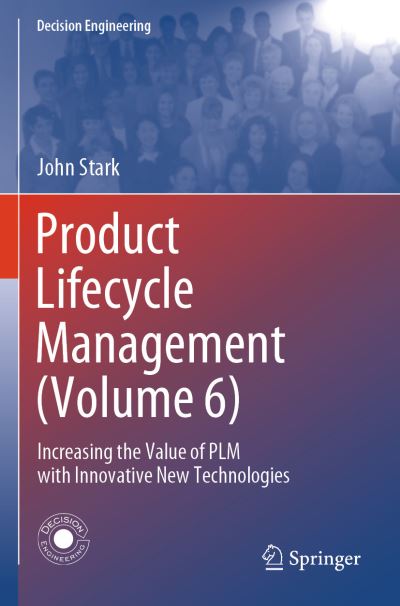
This book is about the relationship between Product Lifecycle Management (PLM) and new technologies that have emerged in the early years of the twenty-first century. The technologies addressed include the Internet of Things (IoT), Artificial Intelligence (AI), Digital Thread, Digital Twins, Big Data, digital transformation, sustainable products, and Systems Engineering.
Product Lifecycle Management is the business activity of managing, in the most effective way, a company's products all the way across their lifecycles-from the very first idea for a product all the way through until it is retired and disposed of. PLM is a key technology for all manufacturing and engineering companies as it manages their products from Ideation, through Definition, Realisation, and Use to Retirement. The basics of PLM have been addressed in previous volumes in this series. Due to its wide span across a company, PLM has many interactions with other key technologies and systems. This Volume 6 of Product Lifecycle Management looks at the relationship of PLM to other technologies and strategies that have emerged in the twenty-first century and are used by manufacturing companies. The book also includes chapters addressing PLM education in different industry sectors such as mechanical engineering and electronic engineering.
| ISBN: | 9783031535239 |
| Publication date: | 24th April 2025 |
| Author: | John Stark |
| Publisher: | Springer an imprint of Springer Nature Switzerland |
| Format: | Paperback |
| Pagination: | 254 pages |
| Series: | Decision Engineering |
| Genres: |
Technical design Production and quality control management Operational research Production and industrial engineering |
This book is about the relationship between Product Lifecycle Management (PLM) and new technologies that have emerged in the early years of the twenty-first century. The technologies addressed include the Internet of Things (IoT), Artificial Intelligence (AI), Digital Thread, Digital Twins, Big Data, digital transformation, sustainable products, and Systems Engineering.
Product Lifecycle Management is the business activity of managing, in the most effective way, a company's products all the way across their lifecycles-from the very first idea for a product all the way through until it is retired and disposed of. PLM is a key technology for all manufacturing and engineering companies as it manages their products from Ideation, through Definition, Realisation, and Use to Retirement. The basics of PLM have been addressed in previous volumes in this series. Due to its wide span across a company, PLM has many interactions with other key technologies and systems. This Volume 6 of Product Lifecycle Management looks at the relationship of PLM to other technologies and strategies that have emerged in the twenty-first century and are used by manufacturing companies. The book also includes chapters addressing PLM education in different industry sectors such as mechanical engineering and electronic engineering.
Product Lifecycle Management (Volume 6) features in the following genres: Technical design, Production and quality control management, Operational research, Production and industrial engineering
Product Lifecycle Management (Volume 6) is available in Paperback
Product Lifecycle Management (Volume 6) was written by John Stark and published by Springer an imprint of Springer Nature Switzerland
Product Lifecycle Management (Volume 6) has 254 pages
Yes it is part of Decision Engineering series
£80.99