

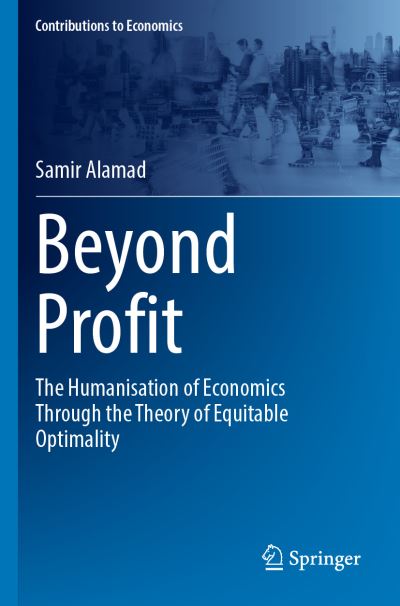
This book advocates for a transformative shift in economics, emphasising the need to manage finite resources equitably while safeguarding universal well-being. It introduces the Equitable Optimality economic theory, departing from materialistic views and championing a theory deeply rooted in moral economy, values, and ethics. By integrating spirituality, social justice, and ethics into economic analysis, this model contends that economics can serve the welfare of all, offering a unique lens for economic theory and policy. It challenges prevailing materialistic economic paradigms by proposing an interest-balanced/free financial economy.
This economic theory prioritises profit-sharing, societal objectives, and equitable resource allocation, aiming to create a more inclusive society. However, practical implementation and comprehensive research are crucial for understanding its impact and overcoming transitional challenges.
The Equitable Optimality economic theory provides a valuable perspective within economics, focusing on ethical foundations, acknowledging non-monetary values, and humanising economic agents. It does not aim to replace conventional economic theories but offers an alternative framework to inspire innovative approaches to economic models and policymaking. Its broader policy perspective aims to foster a more prosperous and harmonious society by integrating ethical considerations, equity and justice into economic decision-making and emphasising societal welfare.
| ISBN: | 9783031497506 |
| Publication date: | 13th April 2025 |
| Author: | Samir Alamad |
| Publisher: | Springer an imprint of Springer Nature Switzerland |
| Format: | Paperback |
| Pagination: | 382 pages |
| Series: | Contributions to Economics |
| Genres: |
Political economy Finance and the finance industry Economic growth |
This book advocates for a transformative shift in economics, emphasising the need to manage finite resources equitably while safeguarding universal well-being. It introduces the Equitable Optimality economic theory, departing from materialistic views and championing a theory deeply rooted in moral economy, values, and ethics.
Beyond Profit features in the following genres: Political economy, Finance and the finance industry, Economic growth
Paperback. £98.99, down from the £109.99 cover price. Not Available.
Beyond Profit was written by Samir Alamad and published by Springer an imprint of Springer Nature Switzerland
Beyond Profit has 382 pages
Yes it is part of Contributions to Economics series
£98.99, reduced from £109.99. Not Available.