

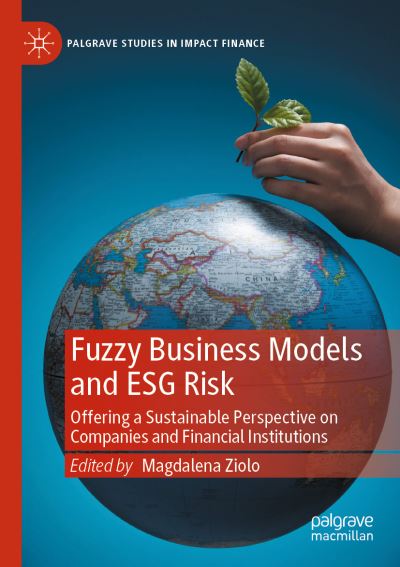
This book discusses fuzzy business models and focuses on using fuzzy logic in business processes from the perspective of financial institutions when integrating ESG factors and risk. Developing and examining sustainable business models requires an appropriate methodology that would consider the specificity of business models because the measurement of this phenomenon is often based on values from specific ranges and requires a fuzzy approach. According to the law, regulations, and recommendations, financial institutions and businesses must incorporate Environmental Social Governance factors and ESG risk in their decision-making process. Sustainable financial institutions include ESG risk in their risk management system, strategies, and policies. As a result, they hope to mitigate ESG risk and create sustainable value in their business models with an impact on sustainable value creation. This book discusses this phenomenon in detail.
One of the first on the market toaddress the issue of fuzzy business models, the book also deals comprehensively with the fuzzy logic in modeling business processes, decision-making processes, and business models using examples from financial institutions, and will be of interest to researchers, professors, and students of sustainable finance, banking, and sustainable development alongside corporate sustainability.
| ISBN: | 9783031405778 |
| Publication date: | 14th October 2024 |
| Author: | Magdalena Ziolo |
| Publisher: | Palgrave Macmillan an imprint of Springer Nature Switzerland |
| Format: | Paperback |
| Pagination: | 153 pages |
| Series: | Palgrave Studies in Impact Finance |
| Genres: |
Management and management techniques Risk assessment Finance and the finance industry Sustainability |
This book discusses fuzzy business models and focuses on using fuzzy logic in business processes from the perspective of financial institutions when integrating ESG factors and risk. Developing and examining sustainable business models requires an appropriate methodology that would consider the specificity of business models because the measurement of this phenomenon is often based on values from specific ranges and requires a fuzzy approach. According to the law, regulations, and recommendations, financial institutions and businesses must incorporate Environmental Social Governance factors and ESG risk in their decision-making process.
Fuzzy Business Models and ESG Risk features in the following genres: Management and management techniques, Risk assessment, Finance and the finance industry, Sustainability
Paperback. £134.99, down from the £149.99 cover price. Not Available.
Fuzzy Business Models and ESG Risk was written by Magdalena Ziolo and published by Palgrave Macmillan an imprint of Springer Nature Switzerland
Fuzzy Business Models and ESG Risk has 153 pages
Yes it is part of Palgrave Studies in Impact Finance series
£134.99, reduced from £149.99. Not Available.