

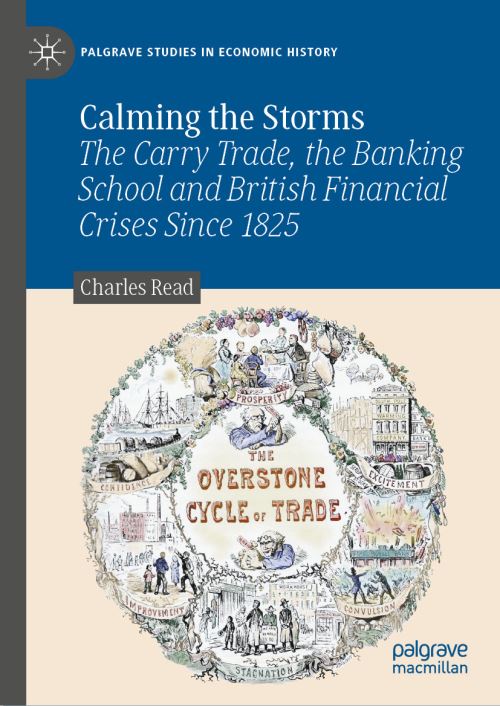
This book exposes, for the first time in modern scholarship, the role that the rise of the Carry Trade played in British financial crises between 1825 and 1866, how in reaction the Bank of England improved its management of monetary policy after 1866 and how those lessons have been forgotten since the 1970s. Britain is one of the few major capitalist economies in the world to have avoided policy-induced systemic financial crises for more than 100 years of its history-between 1866 and 1973. Beforehand, it suffered a series of serious banking panics, in 1825, 1837, 1847, 1857-58 and 1866. Since the 1970s banking instability has returned again, with the global financial crisis of 2007-09 hitting Britain hard. Economists and policymakers have asked what can be learnt from Britain's experience of the disappearance and reappearance of crises to help efforts to prevent future ones. This book answers that question with a major reassessment of Britain's financial history over the past two centuries. It does so by applying the long-neglected ideas of the British Banking School to explain how crises can occur because of the Carry Trade. This book is essential reading for economists and historians of modern Britain, practitioners and policymakers, as well as anyone who is affected by financial crises and their consequences.
| ISBN: | 9783031119132 |
| Publication date: | 2nd January 2023 |
| Author: | Charles Read |
| Publisher: | Palgrave Macmillan an imprint of Springer International Publishing |
| Format: | Hardback |
| Pagination: | 470 pages |
| Series: | Palgrave Studies in Economic History |
| Genres: |
Economic history Finance and the finance industry European history Economic theory and philosophy Macroeconomics Economics |
This book exposes, for the first time in modern scholarship, the role that the rise of the Carry Trade played in British financial crises between 1825 and 1866, how in reaction the Bank of England improved its management of monetary policy after 1866 and how those lessons have been forgotten since the 1970s. Britain is one of the few major capitalist economies in the world to have avoided policy-induced systemic financial crises for more than 100 years of its history-between 1866 and 1973.
Calming the Storms features in the following genres: Economic history, Finance and the finance industry, European history, Economic theory and philosophy, Macroeconomics, Economics
Hardback. £98.99, down from the £109.99 cover price. Not Available.
Calming the Storms was written by Charles Read and published by Palgrave Macmillan an imprint of Springer International Publishing
Calming the Storms has 470 pages
Yes it is part of Palgrave Studies in Economic History series
£98.99, reduced from £109.99. Not Available.