

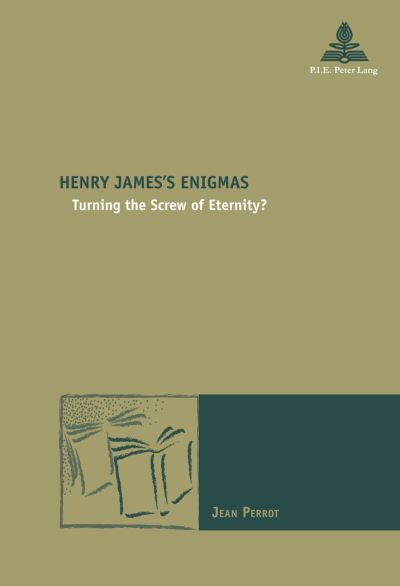
Discovering Lamb House in 1896, Henry James fell under the spell of the words of Biblical &«Wisdom» written on the tower clock of Rye parochial church: &«For our time is a very shadow that passeth away». From the young bachelor's &«angry vow» to &«live for himself and turn the key on his heart» in Watch and Ward (1871) to the decisive The Turn of the Screw (1898) and to the final &«turning the tables» on &«an awful agent» of the Apollo Gallery in the nightmare of A Small Boy and Others (1913), this refined &«ambassador» of American letters, sharing some of the idiosyncrasies of Sacher Masoch and Gustave Flaubert - Jean-Paul Sartre's &«Idiot of the family» - waged a fantastic fight against neurosis for the mastery of his craft.
This study explores the &«gems» that spangle the &«carpet» of his prose. The latter hints at a secret christology and shines with the desire to fight differently the modern Romains de la decadence depicted in Thomas Couture's famous painting. The myth of the Twins inspired by James's relationship with his brother William eventually led him to feel like &«the heir of all the ages».
Burning some letters to protect his privacy, the expatriate writer (1843-1916) constructed his œuvre to share the sky of the literary world Pleiades, and found eternal rest under the vaults of Westminster Abbey.
| ISBN: | 9782875741769 |
| Publication date: | 25th June 2014 |
| Author: | Jean Perrot |
| Publisher: | P.I.E. Peter Lang an imprint of P.I.E-Peter Lang S.A., Éditions Scientifiques Internationales |
| Format: | Paperback |
| Pagination: | 309 pages |
| Series: | New Comparative Poetics |
| Genres: |
Literary studies: c 1800 to c 1900 Literary studies: c 1900 to c 2000 Literary studies: from c 2000 |
Discovering Lamb House in 1896, Henry James fell under the spell of the words of Biblical &«Wisdom» written on the tower clock of Rye parochial church: &«For our time is a very shadow that passeth away». From the young bachelor's &«angry vow» to &«live for himself and turn the key on his heart» in Watch and Ward (1871) to the decisive The Turn of the Screw (1898) and to the final &«turning the tables» on &«an awful agent» of the Apollo Gallery in the nightmare of A Small Boy and Others (1913), this refined &«ambassador» of American letters, sharing some of the idiosyncrasies of Sacher Masoch and Gustave Flaubert - Jean-Paul Sartre's &«Idiot of the family» - waged a fantastic fight against neurosis for the mastery of his craft.
Henry James's Engimas features in the following genres: Literary studies: c 1800 to c 1900, Literary studies: c 1900 to c 2000, Literary studies: from c 2000
Paperback. Not Available.
Henry James's Engimas was written by Jean Perrot and published by P.I.E. Peter Lang an imprint of P.I.E-Peter Lang S.A., Éditions Scientifiques Internationales
Henry James's Engimas has 309 pages
Yes it is part of New Comparative Poetics series