

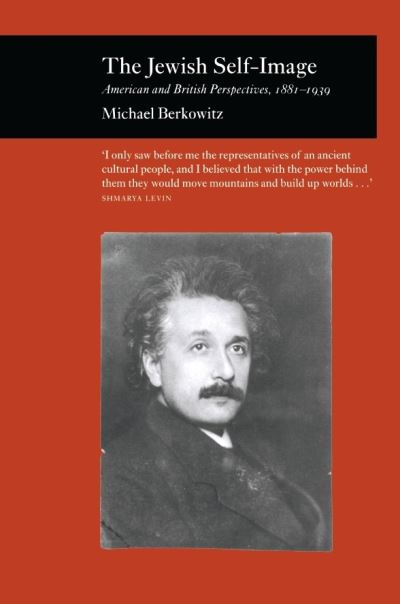
In contrast to treatments of Jews and images that focus on anti-Semitic stereotypes, `. In the western nations of which they were a part Jews were eager to adjust accordingly, yet they also sought to preserve and re-invent forms of Jewish solidarity, tied to economic and political interests. Frequently these efforts, and singular gestures of Jewish dignity and self-assertion, came to be embodied in figures such as Theodor Herzl, Abraham Cahan, Rebecca Sieff, Isaac Hourwich, Leo Baeck, and Albert Einstein.
Zionism took the lead in picturing a new Jewish leadership of the future, but other movements lionised their champions, availing themselves of modern media in order to bolster their cause. The emergence of a relatively unified, politicised western Jewry was both a cause and effect of the rise of the State of Israel. It is best understood against the background of not only anti-Semitism, the Holocaust and Zionism, but a far wider spectrum of Jewish politics, the components of which usually have been examined discretely including Yiddishism, trade unionism, communism, anarchism, territorialism, women's movements, religious parties, and Jews in sport.
The graphic representations of these diverse streams helped animate Jews as advocates of their own local communities and their co-religionists worldwide. This study, by the author of two books on Zionism and Jewish popular culture, sheds light on the origins of ethnic politics.
| ISBN: | 9781861890634 |
| Publication date: | 1st March 2000 |
| Author: | Michael Berkowitz |
| Publisher: | Reaktion Books |
| Format: | Hardback |
| Pagination: | 176 pages |
| Series: | Picturing History |
| Genres: |
Social groups: religious groups and communities Cultural studies |
In contrast to treatments of Jews and images that focus on anti-Semitic stereotypes, `. In the western nations of which they were a part Jews were eager to adjust accordingly, yet they also sought to preserve and re-invent forms of Jewish solidarity, tied to economic and political interests.
The Jewish Self-Image features in the following genres: Social groups: religious groups and communities, Cultural studies
Hardback. Not Available.
The Jewish Self-Image was written by Michael Berkowitz and published by Reaktion Books
The Jewish Self-Image has 176 pages
Yes it is part of Picturing History series