

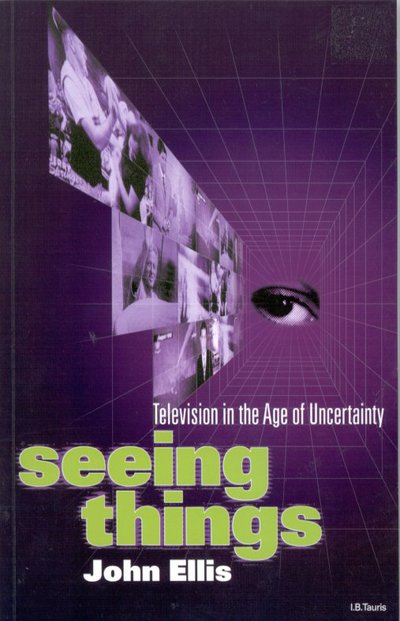
Television, the author argues, responds to two powerful desires of our age: it makes us witnesses of often traumatic events and it tries - and fails - to provide us with narratives that make sense of the world. The author makes sense of modern television, both by exploring its processes and in terms of its dynamic relationships with the cultures that provide it with raw material. Television, he proposes, offers us multiple ways of understanding the world, yet does not arbitrate between them.
He explores this process as one of "working through", whereby television news takes in the chaos and conflict of the world and subsequent programmes of all kinds offer diverse ways of unravelling its confusions, from the psychobabble of talk shows to the open narratives of soaps, documentaries and dramas. By means of this working through, problems are exhausted rather than resolved. The author demonstrates how television's function in its new era is no longer that of building consensus; rather it uses all the means at its disposal, including sophisticated computer graphics, to mediate etween conflicting approaches to our age of uncertainty.
| ISBN: | 9781860641251 |
| Publication date: | 31st December 1999 |
| Author: | John Ellis |
| Publisher: | I. B. Tauris |
| Format: | Hardback |
| Pagination: | 193 pages |
| Genres: |
Media studies |
Television, the author argues, responds to two powerful desires of our age: it makes us witnesses of often traumatic events and it tries - and fails - to provide us with narratives that make sense of the world. The author makes sense of modern television, both by exploring its processes and in terms of its dynamic relationships with the cultures that provide it with raw material.
Seeing Things features in the following genres: Media studies
Hardback, Paperback. Not Available.
Seeing Things was written by John Ellis and published by I. B. Tauris
Seeing Things has 193 pages