

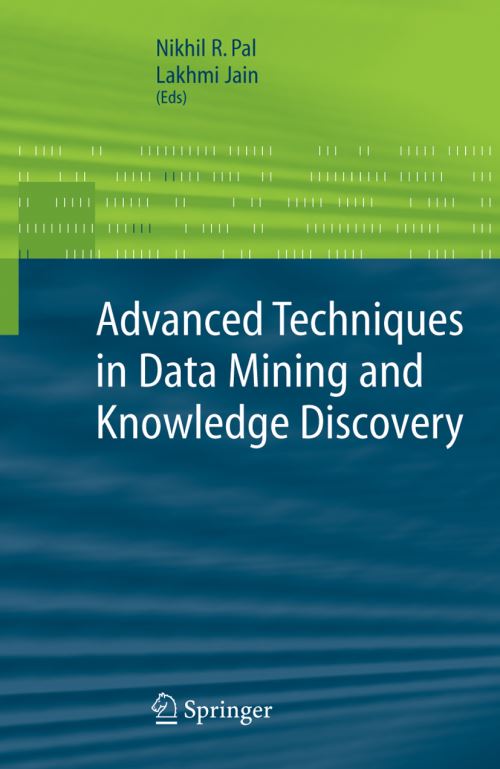
Data mining and knowledge discovery (DMKD) is a rapidly expanding field in computer science. It has become very important because of an increased demand for methodologies and tools that can help the analysis and understanding of huge amounts of data generated on a daily basis by institutions like hospitals, research laboratories, banks, insurance companies, and retail stores and by Internet users. This explosion is a result of the growing use of electronic media.
But what is data mining (DM)? A Web search using the Google search engine retrieves many (really many) definitions of data mining. We include here a few interesting ones.
One of the simpler definitions is: "As the term suggests, data mining is the analysis of data to establish relationships and identify patterns" [1]. It focuses on identifying relations in data. Our next example is more elaborate: An information extraction activity whose goal is to discover hidden facts contained in databases.
Using a combination of machine learning, statistical analysis, modeling techniques and database technology, data mining finds patterns and subtle relationships in data and infers rules that allow the prediction of future results. Typical applications include market segmentation, customer profiling, fraud detection, evaluation of retail promotions, and credit risk analysis [2].
| ISBN: | 9781852338671 |
| Publication date: | 1st July 2005 |
| Author: | Nikhil R Pal, L C Jain |
| Publisher: | Springer an imprint of Springer London |
| Format: | Hardback |
| Pagination: | 254 pages |
| Series: | Advanced Information and Knowledge Processing |
| Genres: |
Algorithms and data structures Information theory Databases Applied computing |
Data mining and knowledge discovery (DMKD) is a rapidly expanding field in computer science. It has become very important because of an increased demand for methodologies and tools that can help the analysis and understanding of huge amounts of data generated on a daily basis by institutions like hospitals, research laboratories, banks, insurance companies, and retail stores and by Internet users.
Advanced Techniques in Knowledge Discovery and Data Mining features in the following genres: Algorithms and data structures, Information theory, Databases, Applied computing
Hardback. Not Available.
Advanced Techniques in Knowledge Discovery and Data Mining was written by Nikhil R Pal, L C Jain and published by Springer an imprint of Springer London
Advanced Techniques in Knowledge Discovery and Data Mining has 254 pages
Yes it is part of Advanced Information and Knowledge Processing series