

first industrial application of MPC was in 1973. A key motivation was to provide better performance than could be obtained with the widely-used PID controller whilst making it easy to replace the PID controller unit or module with his new algorithm. It was the advent of digital control technology and the use of software control algorithms that made this replacement easier and more acceptable to process engineers.
A decade of industrial practice with PFC was reported in the archival literature by Jacques Richalet et al. in 1978 in an important seminal Automatica paper. Around this time, Cutler and Ramaker published the dynamic matrix control algorithm that also used knowledge of future reference signals to determine a sequence of control signal adjustment.
Thus, the theoretical and practical development of predictive control methods was underway and subsequent developments included those of generalized predictive control, and the whole armoury of MPC methods.
Jacques Richalet's approach to PFC was to seek an algorithm that was:
| ISBN: | 9781849968454 |
| Publication date: | 2nd January 2013 |
| Author: | J Richalet, Donal ODonovan |
| Publisher: | Springer an imprint of Springer London |
| Format: | Paperback |
| Pagination: | 222 pages |
| Series: | Advances in Industrial Control |
| Genres: |
Automatic control engineering Building construction and materials Automotive technology and trades Industrial chemistry and chemical engineering Production and industrial engineering Electronics engineering |
first industrial application of MPC was in 1973. A key motivation was to provide better performance than could be obtained with the widely-used PID controller whilst making it easy to replace the PID controller unit or module with his new algorithm.
Predictive Functional Control features in the following genres: Automatic control engineering, Building construction and materials, Automotive technology and trades, Industrial chemistry and chemical engineering, Production and industrial engineering, Electronics engineering
Paperback, Hardback. Not Available.
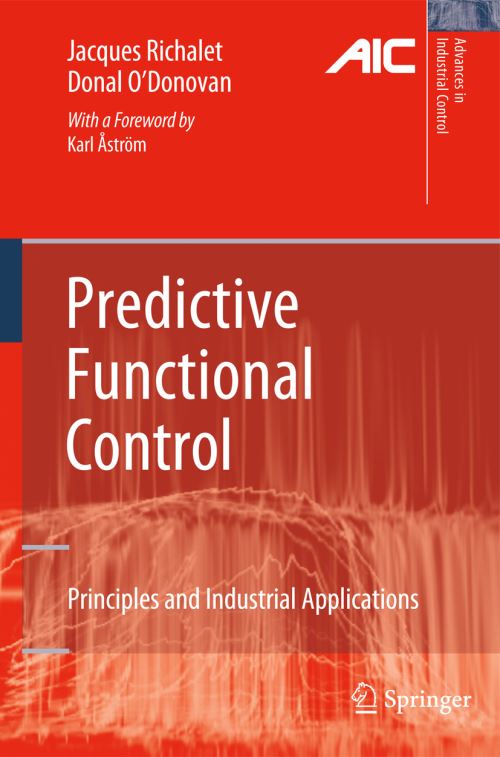
Predictive Functional Control was written by J Richalet, Donal ODonovan and published by Springer an imprint of Springer London
Predictive Functional Control has 222 pages
Yes it is part of Advances in Industrial Control series