

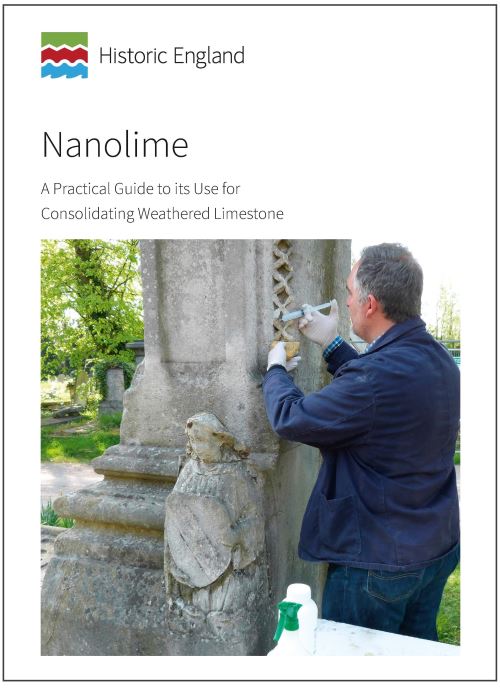
This guidance is aimed at conservators and those specifying conservation treatments for historic stonework. It will also be of interest to conservation officers, and building owners and managers.
Although the past ten years have seen an increase in the use of nanolime as a stone consolidant, not much was known about its properties and performance, and there had been no long-term evaluation of its effect on deteriorated limestone in an external UK environment. Furthermore, there was no consistent guidance regarding application of nanolime. For these reasons, Historic England commissioned a programme of research at the University of Bath and site trials at various English cathedrals.
This information will aid practitioners and specifiers to make informed decisions about when and how to use nanolime. This document describes:
| ISBN: | 9781848025233 |
| Publication date: | 8th May 2017 |
| Author: | David Odgers |
| Publisher: | Historic England |
| Format: | Paperback |
| Pagination: | 32 pages |
| Series: | Historic England Guidance |
| Genres: |
Conservation of buildings and building materials |
This guidance is aimed at conservators and those specifying conservation treatments for historic stonework. It will also be of interest to conservation officers, and building owners and managers.
Nanolime features in the following genres: Conservation of buildings and building materials
Paperback. Not Available.
Nanolime was written by David Odgers and published by Historic England
Nanolime has 32 pages
Yes it is part of Historic England Guidance series