

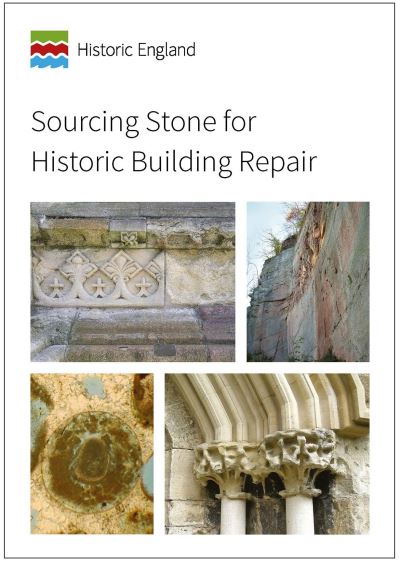
This Technical Advice Note is aimed at architects, surveyors, engineers, building managers, contractors, conservation officers and owners who need to obtain matching stone for repairing a historic building or monument.
Successful stone replacement requires detailed knowledge of the characteristics of the stone involved and the selection of compatible materials (that is stone that closely replicates the original in terms of its chemical, physical and mineralogical properties).The stone-sourcing process involves several steps:
establishing the significance of the building, and the likely impact of intervention
understanding why the stone is deteriorating
undertaking a survey to determine the need for stone repair or replacement
determining the types of stone used, by visual examination in situ
answering any technical questions arising in the steps above, by detailed analysis of samples taken from the structure
obtaining samples of potential replacement stone for analysis, and testing these where necessary
sourcing replacement stone from existing quarries, quarries temporarily
re-opened for the purpose or by re-using stone salvaged from a demolished structure
Advice on each step is provided, enabling readers to make informed decisions at every stage of the procurement process and thus helping to ensure that any new stone is compatible with the historic fabric.
Historic England supports the need for strategic and sustainable sources of stone for conservation of historic buildings. It is working with partners to ensure that historic sources of important building stones are identified and protected, and that the environmental impact of their extraction is minimised. Addressing the wider issues arising from sourcing and quarrying stone will contribute to the long-term preservation of our rich and diverse stone-built heritage.
| ISBN: | 9781848024588 |
| Publication date: | 3rd August 2016 |
| Author: | Historic England |
| Publisher: | Historic England |
| Format: | Paperback |
| Pagination: | 36 pages |
| Series: | Historic England Guidance |
| Genres: |
Conservation of buildings and building materials Geomorphology and geological surface processes Construction and heavy industry |
This Technical Advice Note is aimed at architects, surveyors, engineers, building managers, contractors, conservation officers and owners who need to obtain matching stone for repairing a historic building or monument. Successful stone replacement requires detailed knowledge of the characteristics of the stone involved and the selection of compatible materials (that is stone that closely replicates the original in terms of its chemical, physical and mineralogical properties).The stone-sourcing process involves several steps: establishing the significance of the building, and the likely impact of intervention understanding why the stone is deteriorating undertaking a survey to determine the need for stone repair or replacement determining the types of stone used, by visual examination in situ answering any technical questions arising in the steps above, by detailed analysis of samples taken from the structure obtaining samples of potential replacement stone for analysis, and testing these where necessary sourcing replacement stone from existing quarries, quarries temporarily re-opened for the purpose or by re-using stone salvaged from a demolished structure Advice on each step is provided, enabling readers to make informed decisions at every stage of the procurement process and thus helping to ensure that any new stone is compatible with the historic fabric.
Sourcing Stone for Historic Building Repair features in the following genres: Conservation of buildings and building materials, Geomorphology and geological surface processes, Construction and heavy industry
Paperback. Not Available.
Sourcing Stone for Historic Building Repair was written by Historic England and published by Historic England
Sourcing Stone for Historic Building Repair has 36 pages
Yes it is part of Historic England Guidance series