

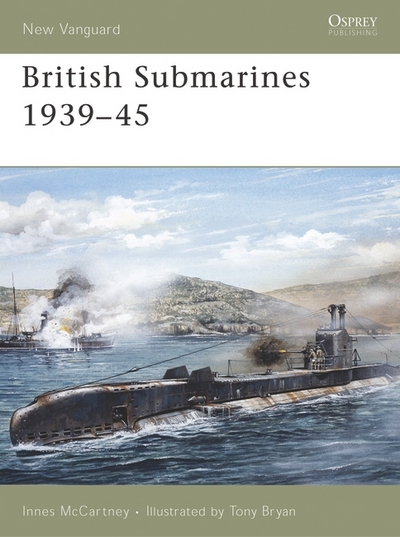
The submarine was as formidable a weapon for the Royal Navy in World War II as for the other main combatant nations. The first half of this book explores the conception, design, development and subesequent evolution of the three major classes: the "S", "T", and "U".
The "S" Class submarine was originally conceived in the 1920s, specifically for deployment in narrow seas. As the war progressed the submarine was modified to increase its diving capability and fuel-carrying capacity, and radar and many other features were added. The "S" Class served in all theaters from the North Atlantic to the Pacific with notable success, in many cases surviving very severe damage.
The "T" Class submarine was originally conceived for operations in the Far East, thus was one of the largest types to be built and serve in World War II. The development of the "T" Class during the war was sometimes at the expense of its underwater stability and in the Mediterranean theater half of the submarines that were deployed sunk.
The "U" Class include Upholder , the most successful British submarine of World War II.
The second half of the book surveys the major submarine actions of the war, including the Norwegian Campaign, operatins to save Malta and many other engagements in all theaters involving British submarines, German U-Boats and the Japanese. The author has accessed many previously unpublished sources and draws on his own extensive underwater research to give a highly detailed and informed account of the British submarine.
| ISBN: | 9781846030079 |
| Publication date: | 10th November 2006 |
| Author: | Innes McCartney, Tony Bryan |
| Publisher: | Osprey Publishing |
| Format: | Paperback |
| Pagination: | 48 pages |
| Series: | New Vanguard |
| Genres: |
European history Military history Second World War Naval forces and warfare Battles and campaigns |
The submarine was as formidable a weapon for the Royal Navy in World War II as for the other main combatant nations. The first half of this book explores the conception, design, development and subesequent evolution of the three major classes: the "S", "T", and "U".
British Submarines, 1939-45 features in the following genres: European history, Military history, Second World War, Naval forces and warfare, Battles and campaigns
Paperback. £11.69, down from the £12.99 cover price. Not Available.
British Submarines, 1939-45 was written by Innes McCartney, Tony Bryan and published by Osprey Publishing
British Submarines, 1939-45 has 48 pages
Yes it is part of New Vanguard series
£11.69, reduced from £12.99. Not Available.