

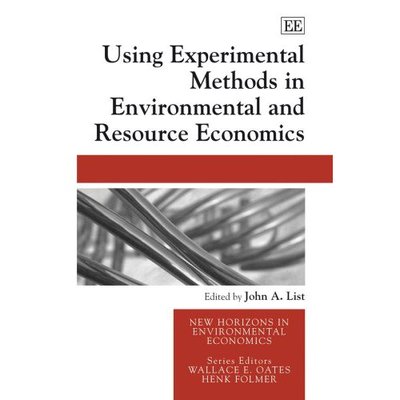
This book explores frontier work at the intersection of experimental and environmental economics, with cutting edge research provided by premier scholars in the field.
The book begins by focusing on improving benefit-cost analysis, which remains the hallmark of public policy decision-making around the globe. The contributors provide innovative avenues to credibly lead to more efficient policies. These insights should prove to be fundamental components of the valuation process. They then explore, in myriad clever ways, important aspects associated with optimal resource use and regulation of resources. Clearly these issues remain of utmost importance, both in a positive and normative sense, therefore the authors offer a good introduction to some of these issues and present logical solutions. A discussion of behavioural economics and non-market valuation is also provided.
Students and policymakers will find Using Experimental Methods in Environmental and Resource Economics of great interest.
| ISBN: | 9781845428556 |
| Publication date: | 15th October 2006 |
| Author: | John A List |
| Publisher: | Edward Elgar Publishing |
| Format: | Hardback |
| Pagination: | 186 pages |
| Series: | New Horizons in Environmental Economics |
| Genres: |
Environmental economics |
This book explores frontier work at the intersection of experimental and environmental economics, with cutting edge research provided by premier scholars in the field.The book begins by focusing on improving benefit-cost analysis, which remains the hallmark of public policy decision-making around the globe. The contributors provide innovative avenues to credibly lead to more efficient policies.
Using Experimental Methods in Environmental and Resource Economics features in the following genres: Environmental economics
Hardback. Not Available.
Using Experimental Methods in Environmental and Resource Economics was written by John A List and published by Edward Elgar Publishing
Using Experimental Methods in Environmental and Resource Economics has 186 pages
Yes it is part of New Horizons in Environmental Economics series